The Things Conference 2026
I actually had no intention of going to Amsterdam at all. It all started with my article about Deep Learning on the ESP32-P4. For digit recognition with MNIST data, I had used an ESP32-P4 Display Board from Elecrow. At the end of August, Elecrow contacted me and asked if they could use my project at The Things Conference 2026 as part of their exhibition presentation. Naturally, that was fine with me. Then came the question of whether I would happen to be there as well. Since the tickets aren't exactly cheap and a trip to Amsterdam is no small matter, I was rather skeptical. A day later, I had a ticket in my inbox. That settled the matter: I'm embarking on the adventure. When I told Elecrow this, the next surprise immediately followed. Wouldn't I like to present my project myself? And just like that, completely unexpectedly, I turned from a visitor into a speaker :-)
The Conference at the Kromhouthall
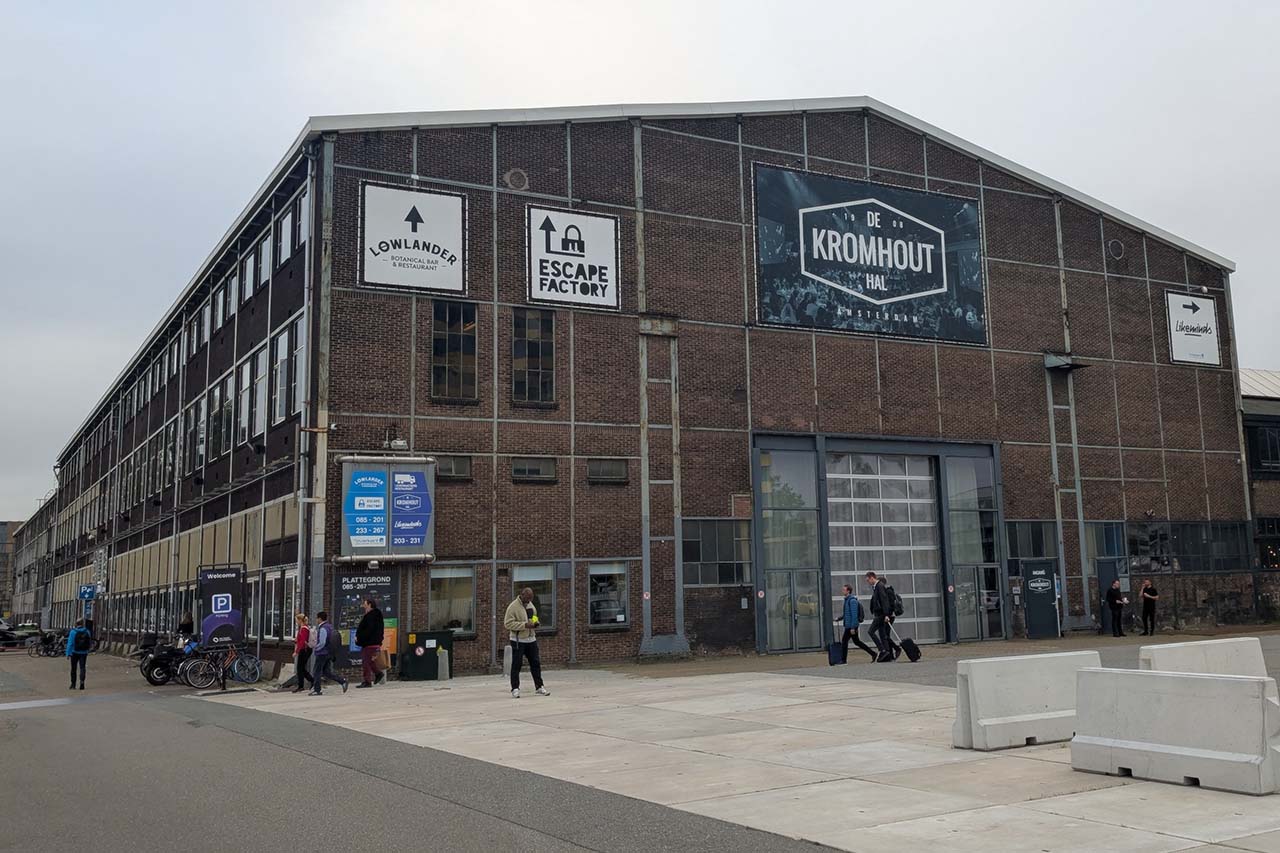
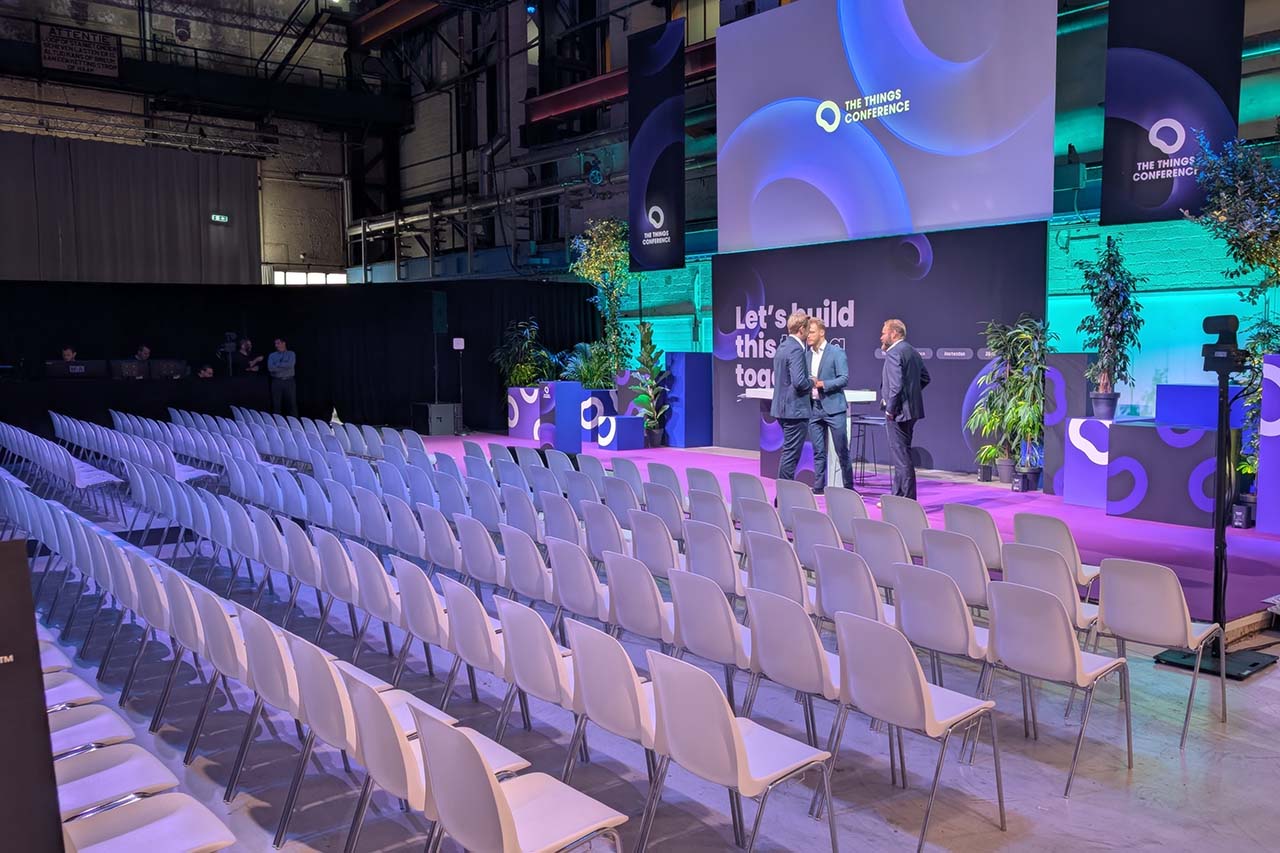
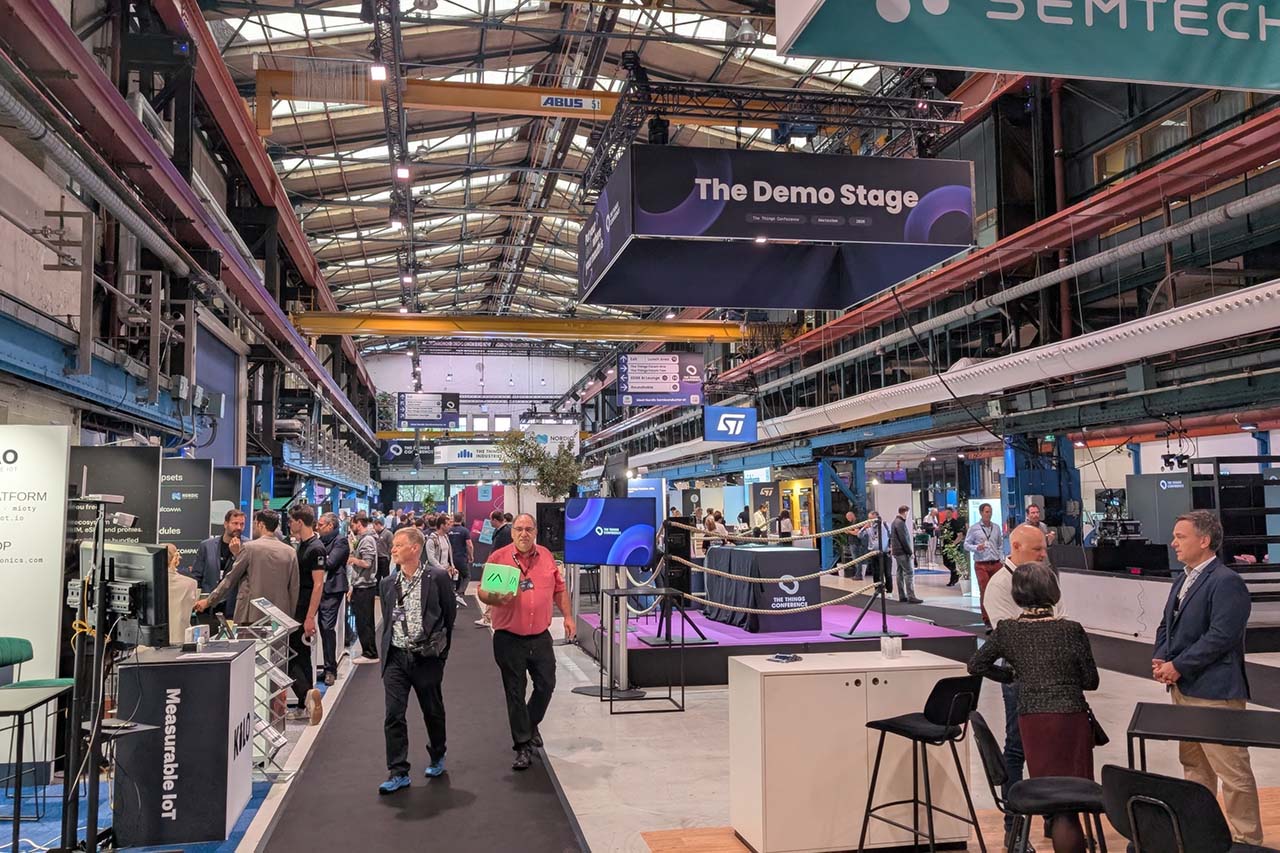
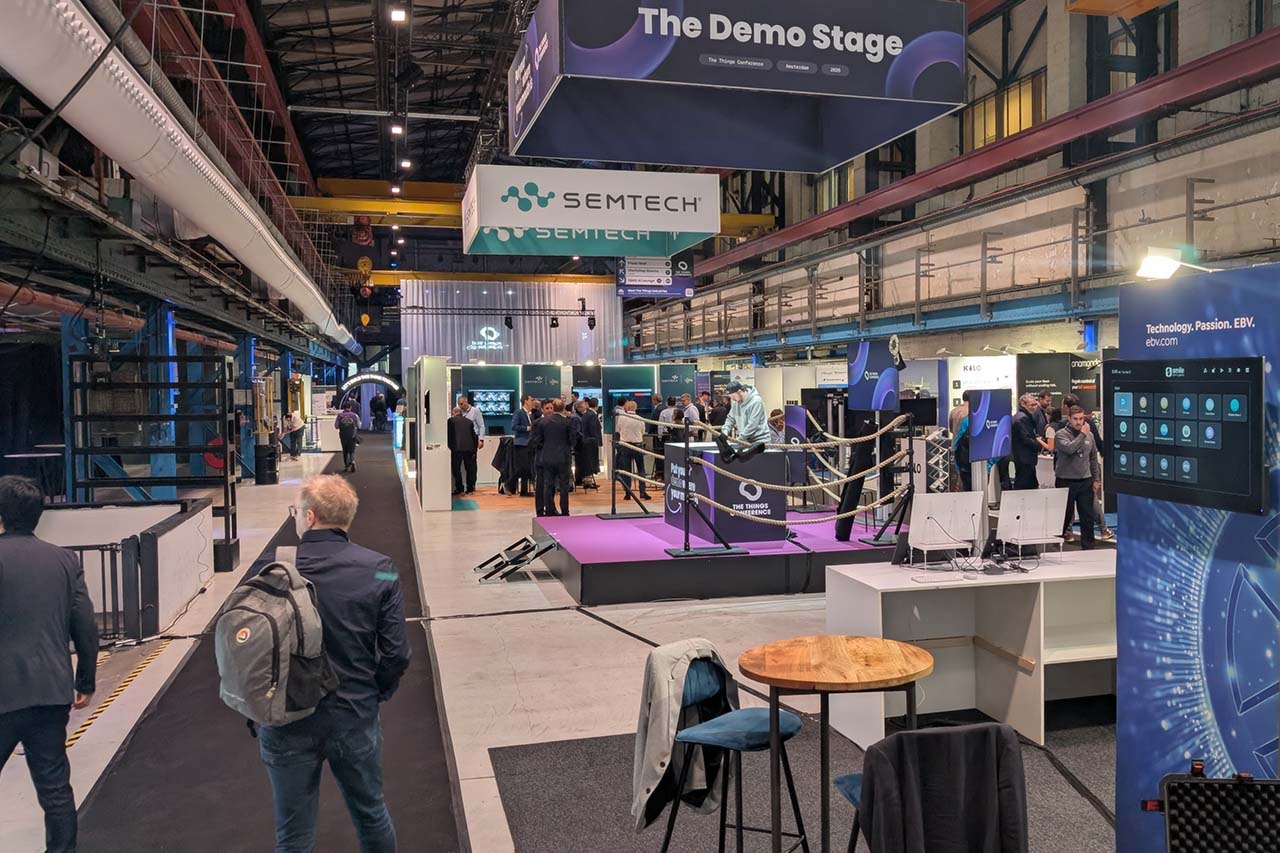
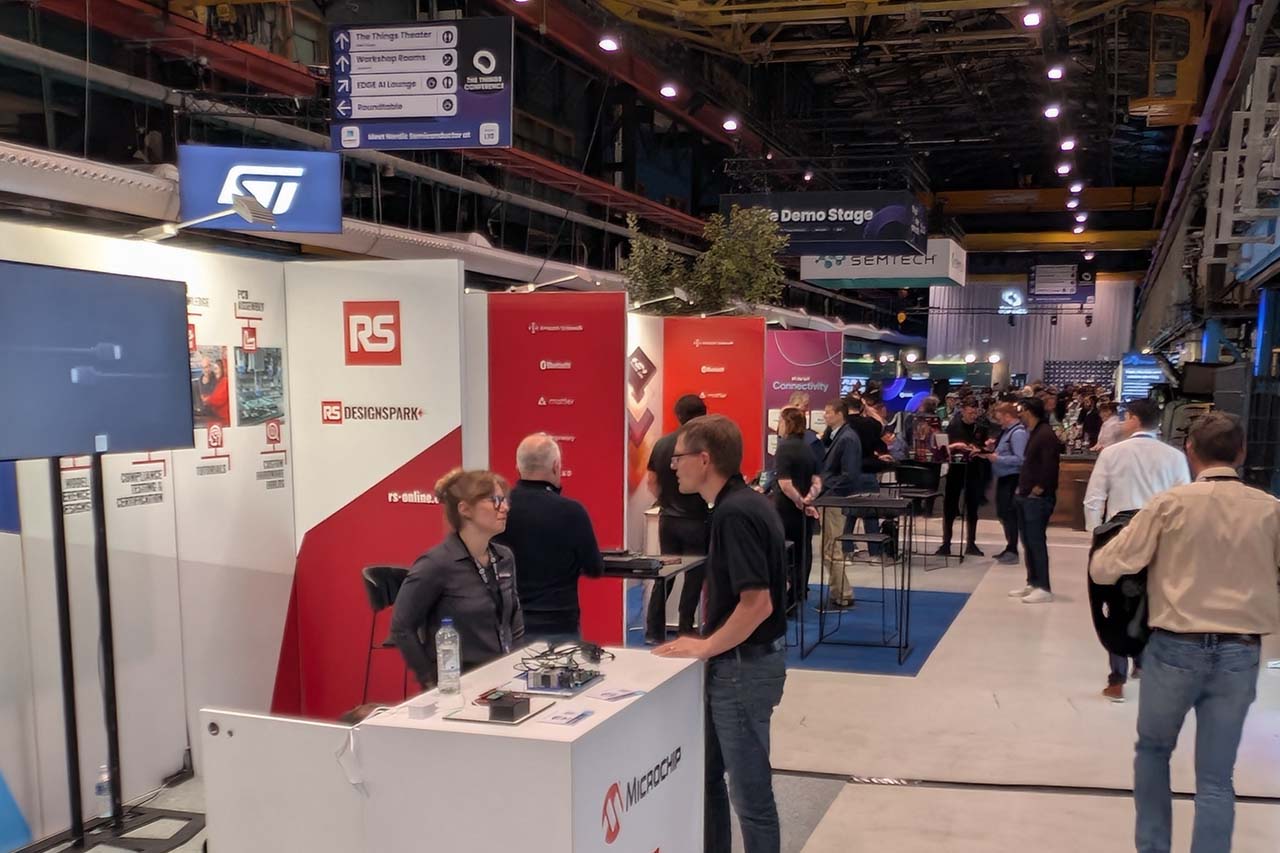
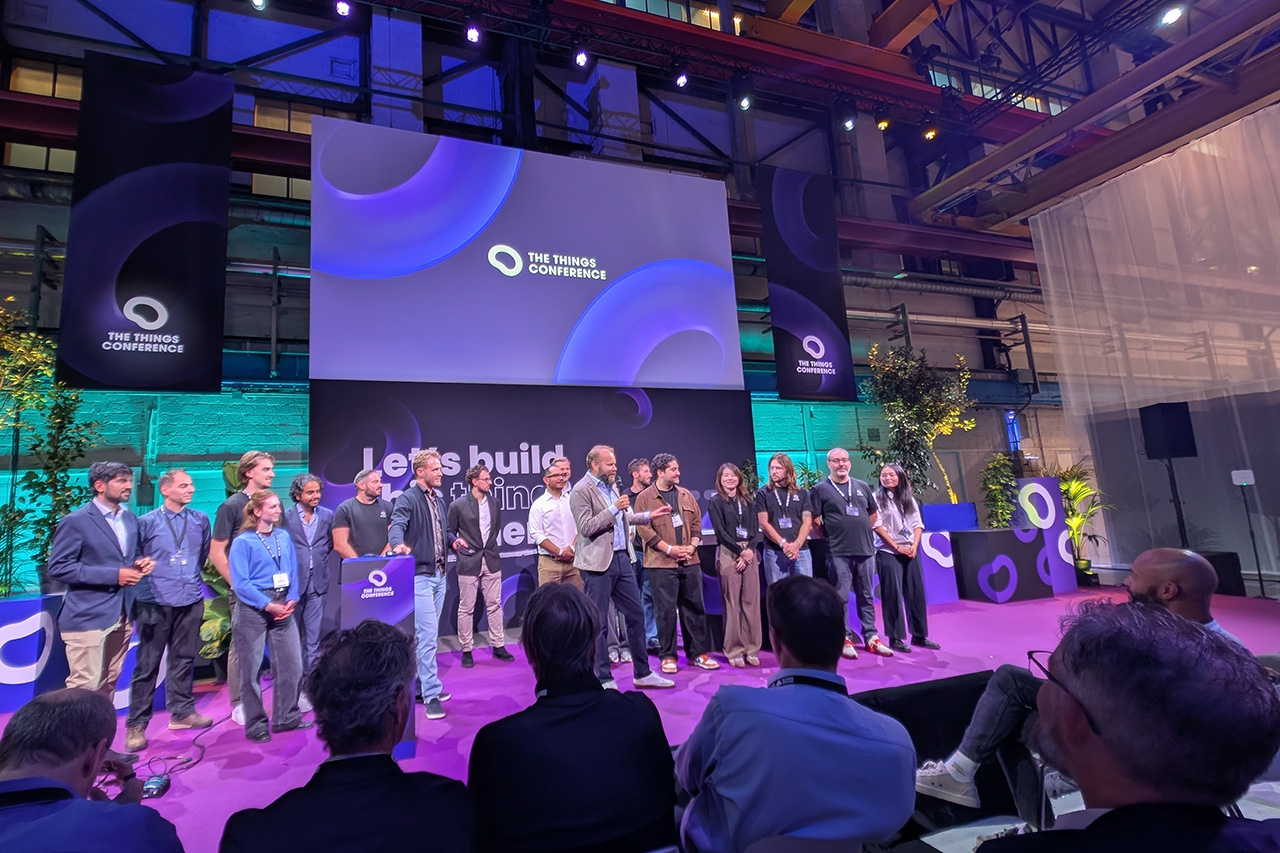
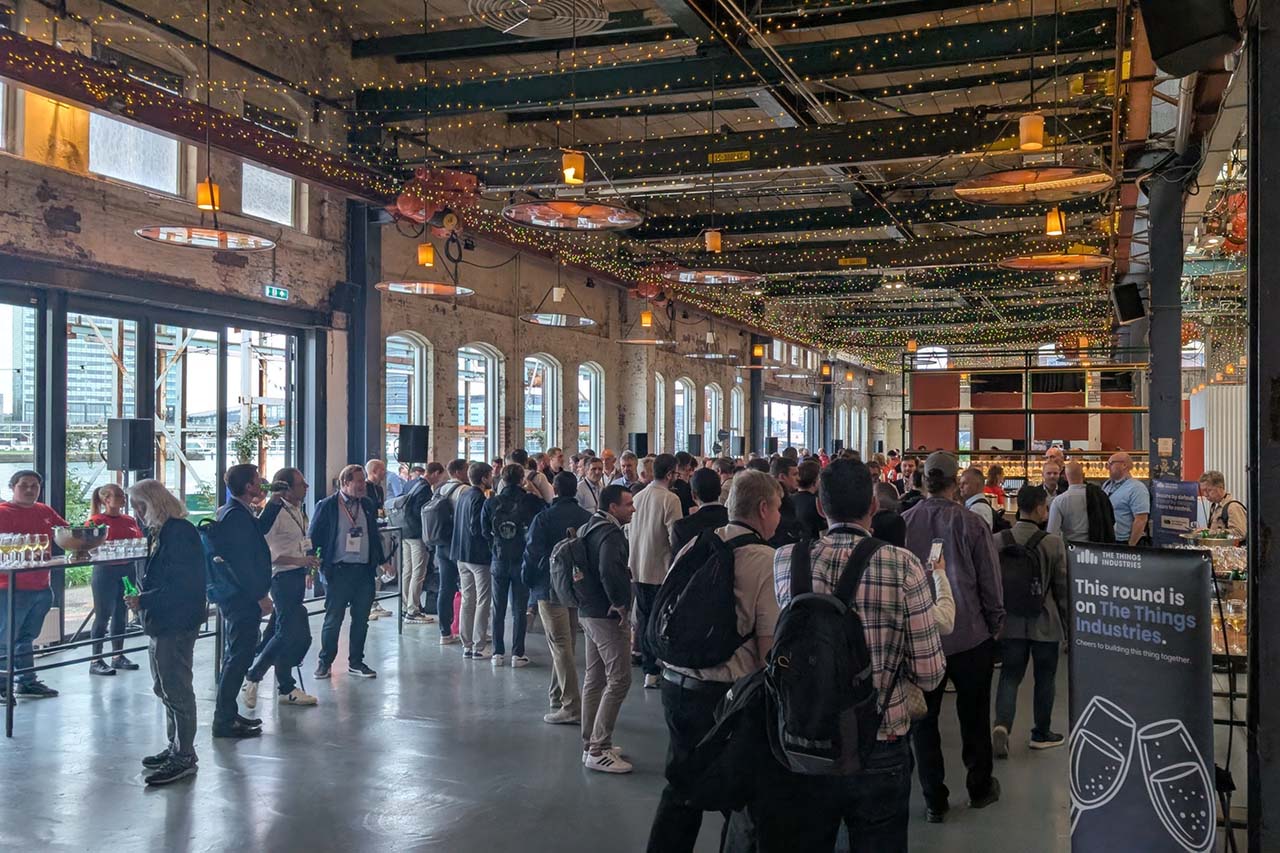
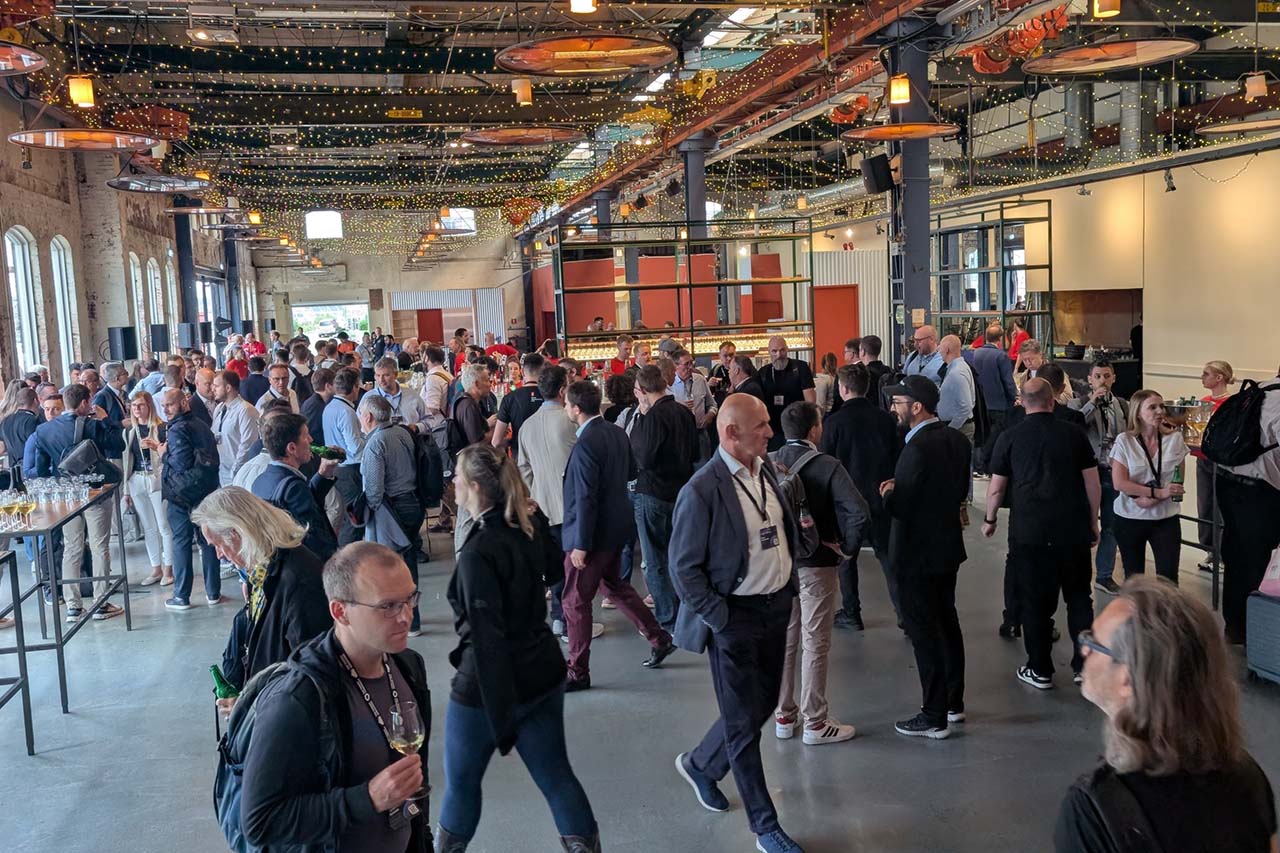
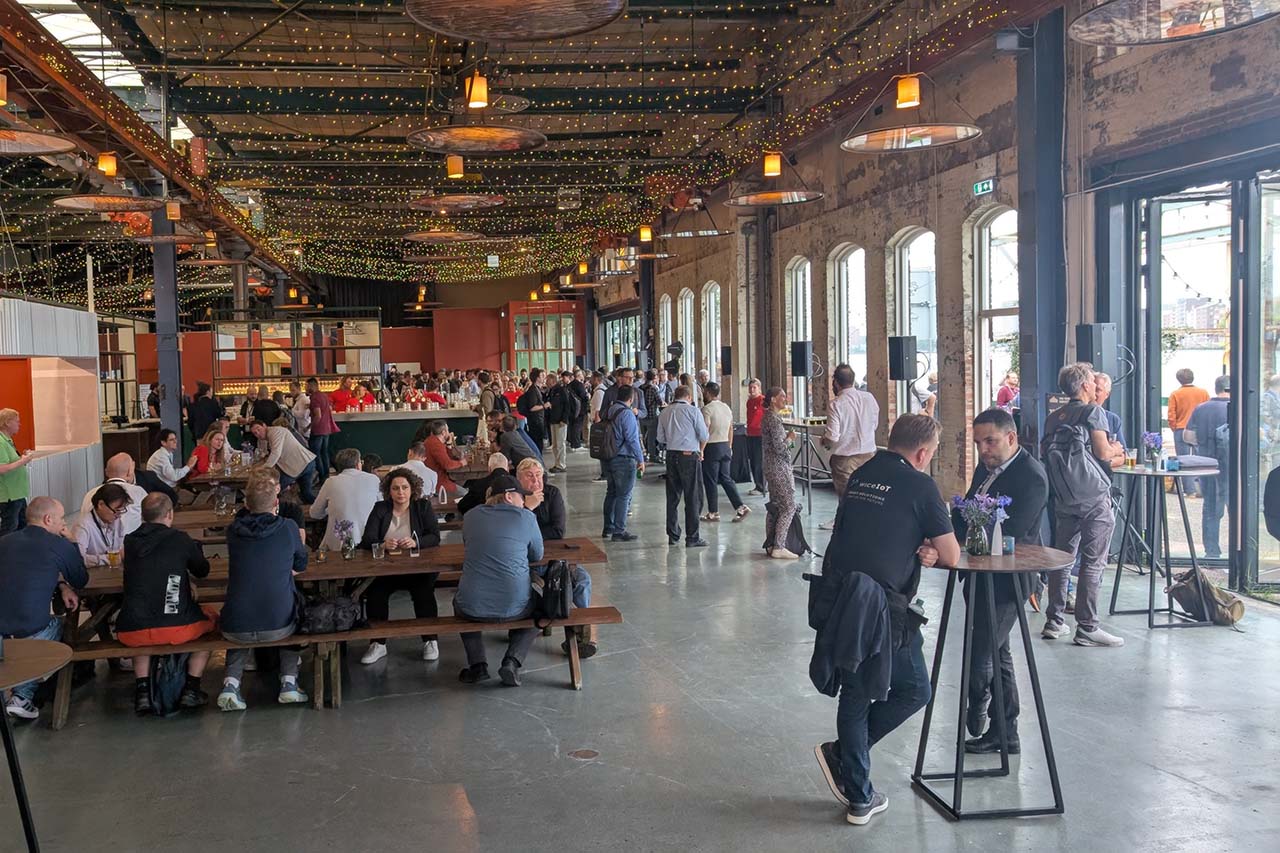
The The Things Conference took place for the ninth time on September 22 and 23, 2026, as usual in the Kromhouthal in Amsterdam-Noord. Conveniently, my hotel was located right next door, so I only had a few meters to walk to the hall.
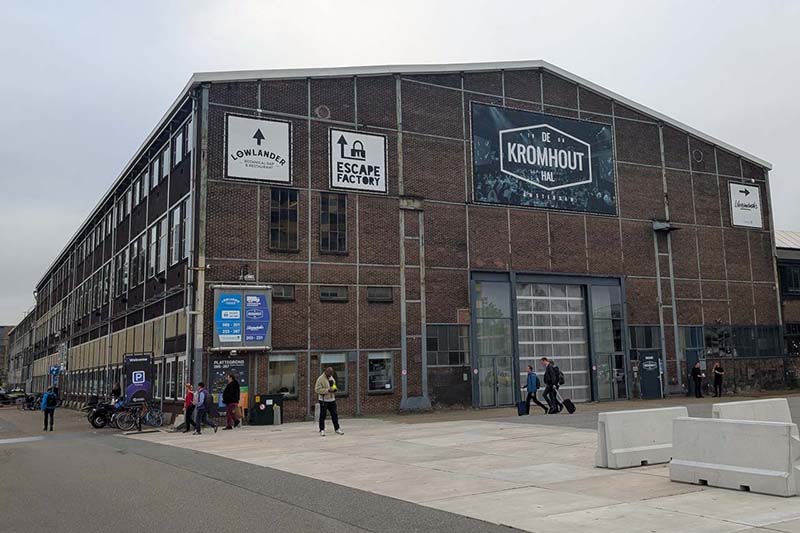
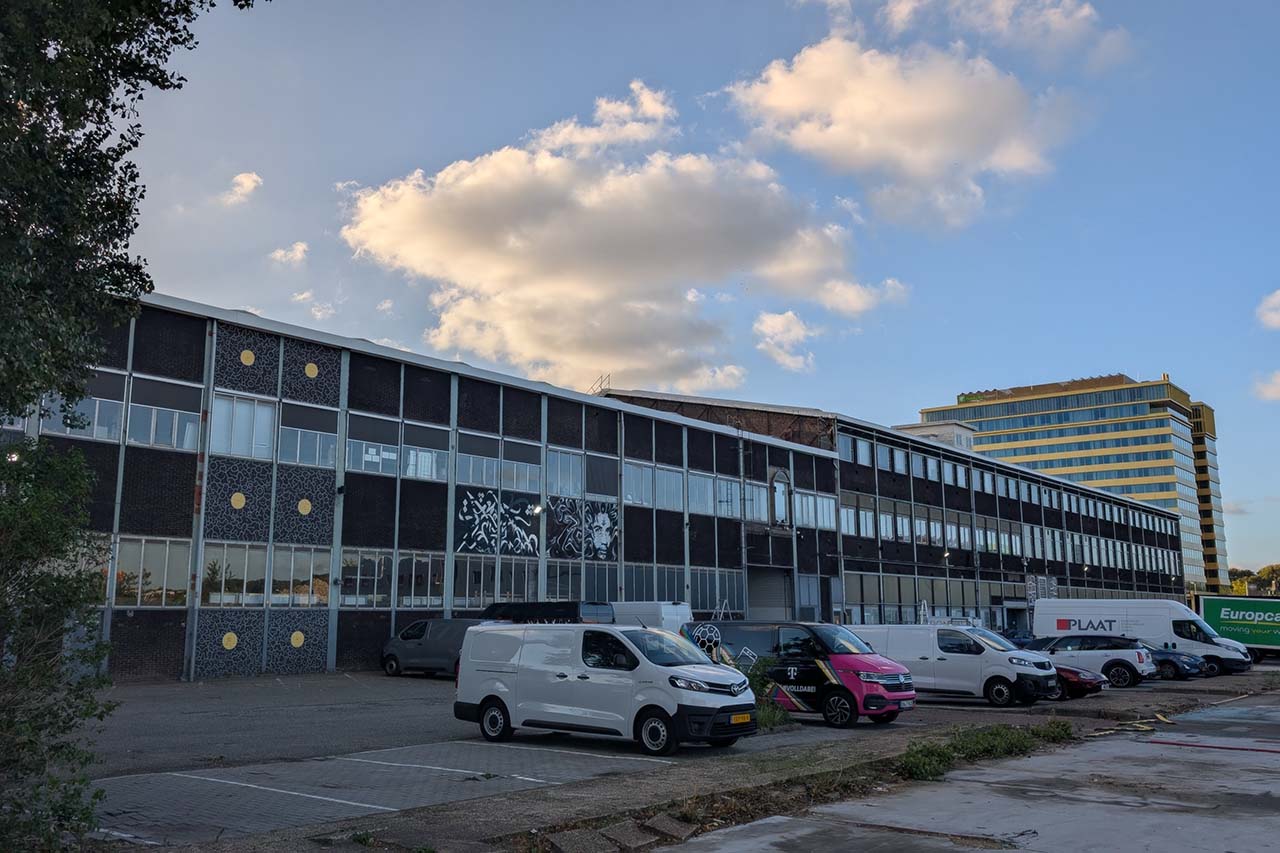
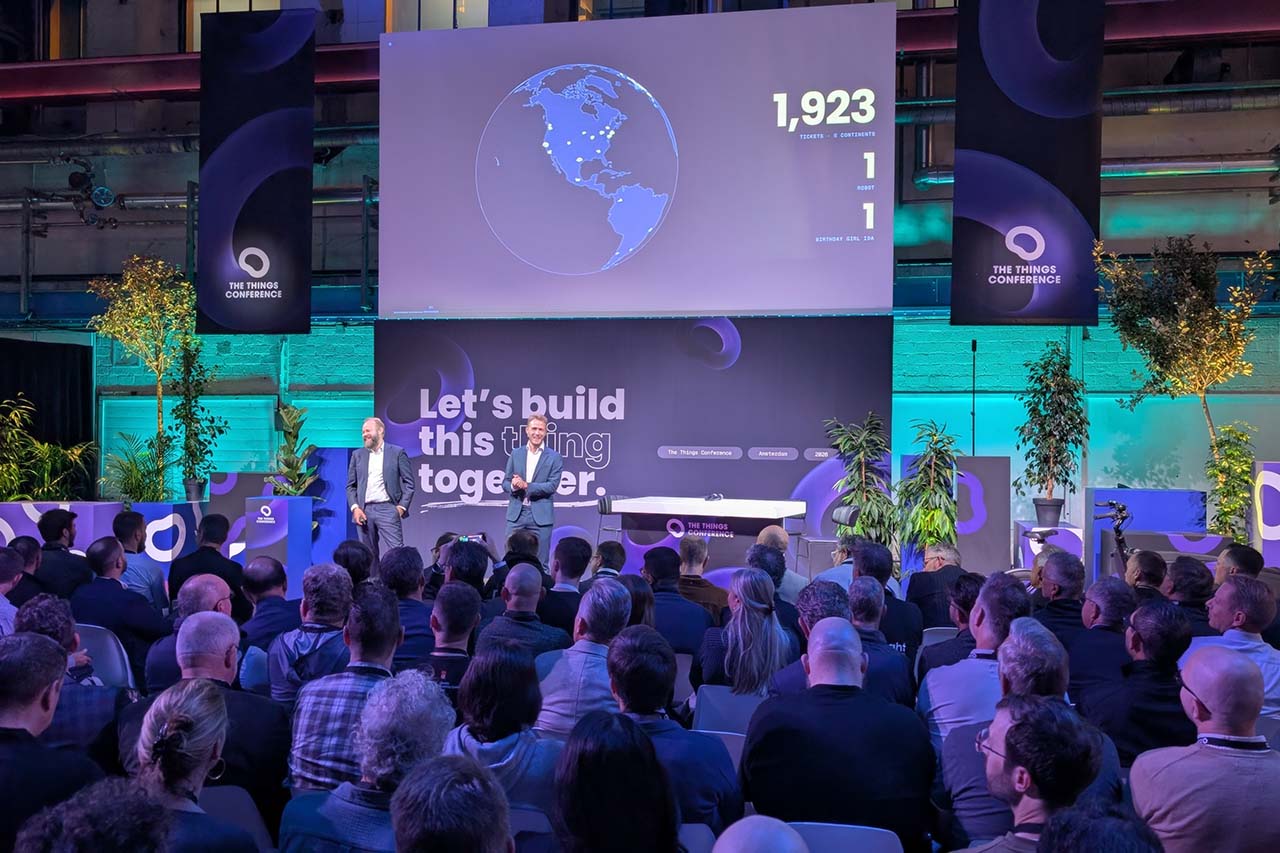
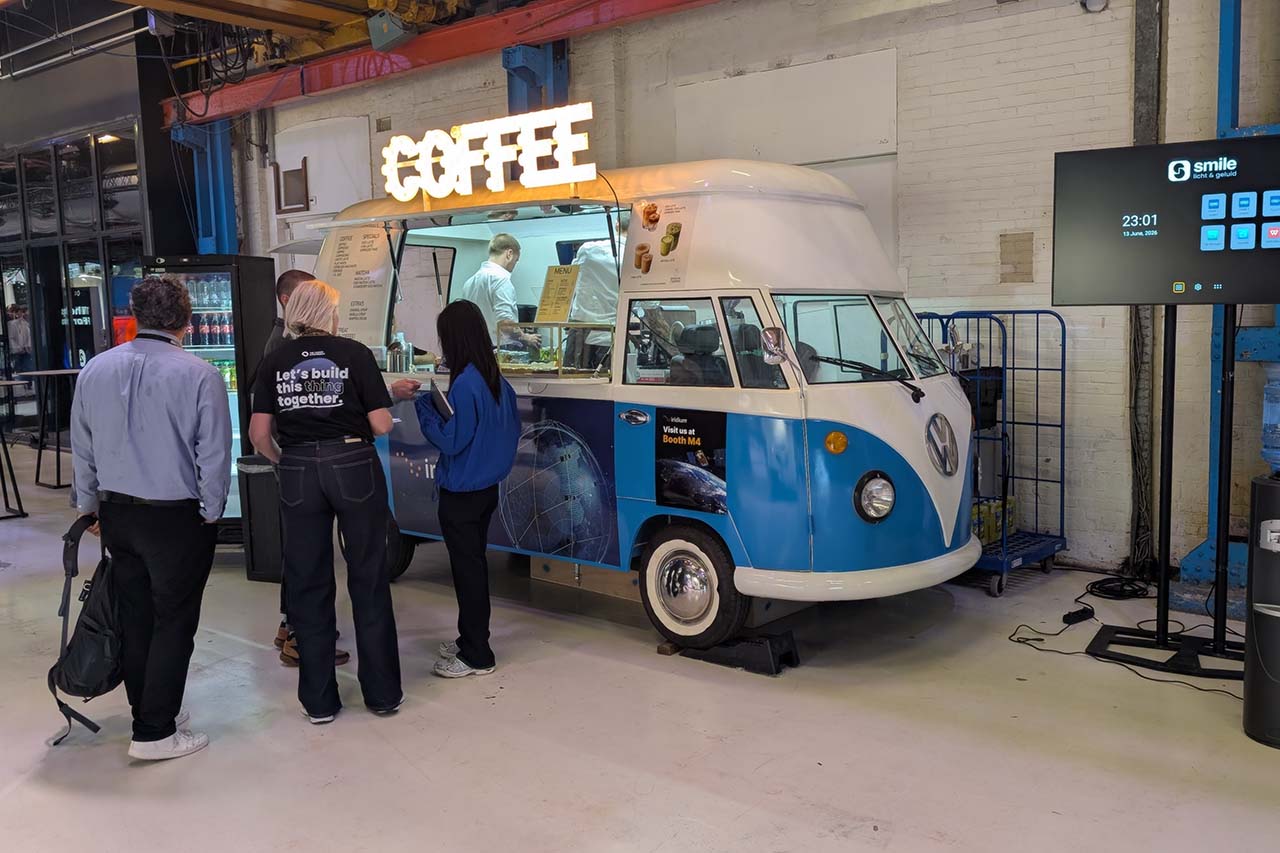
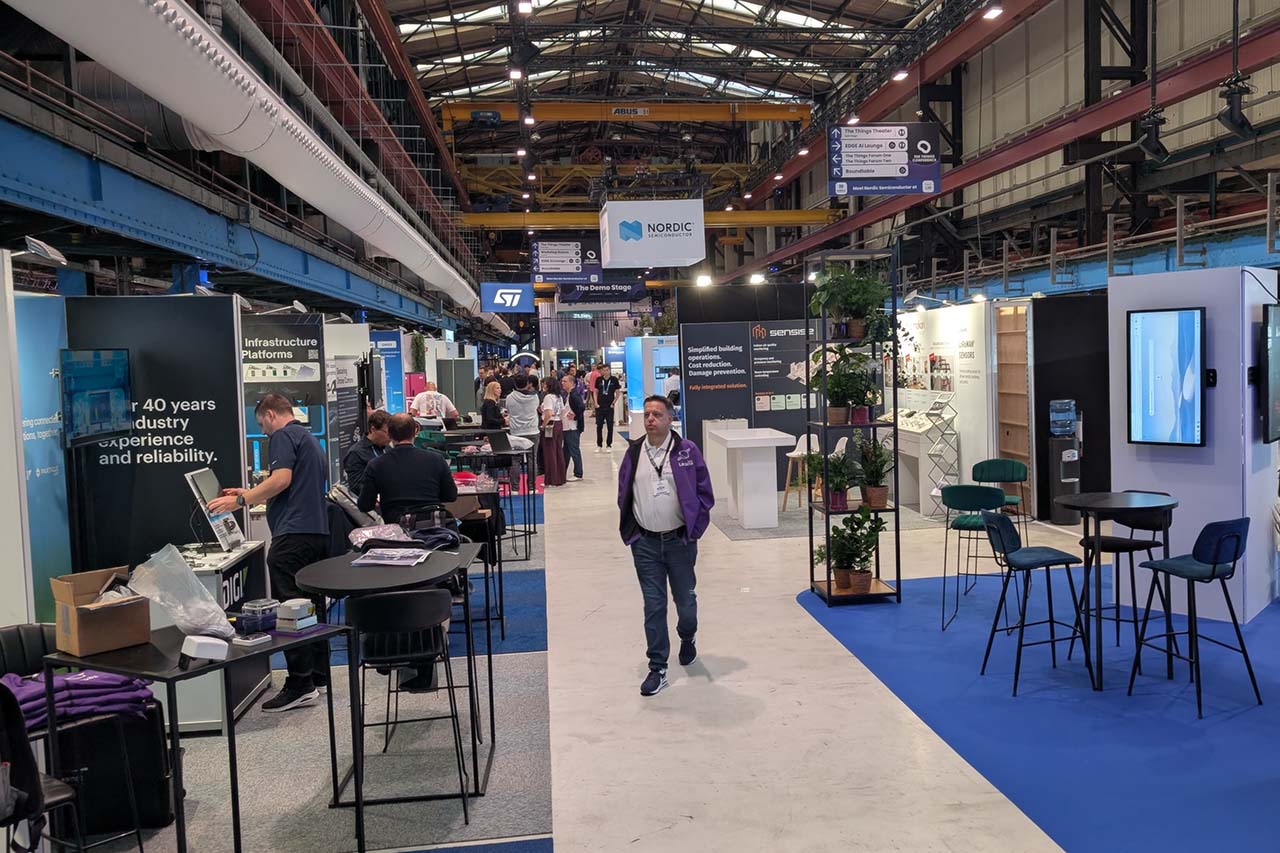
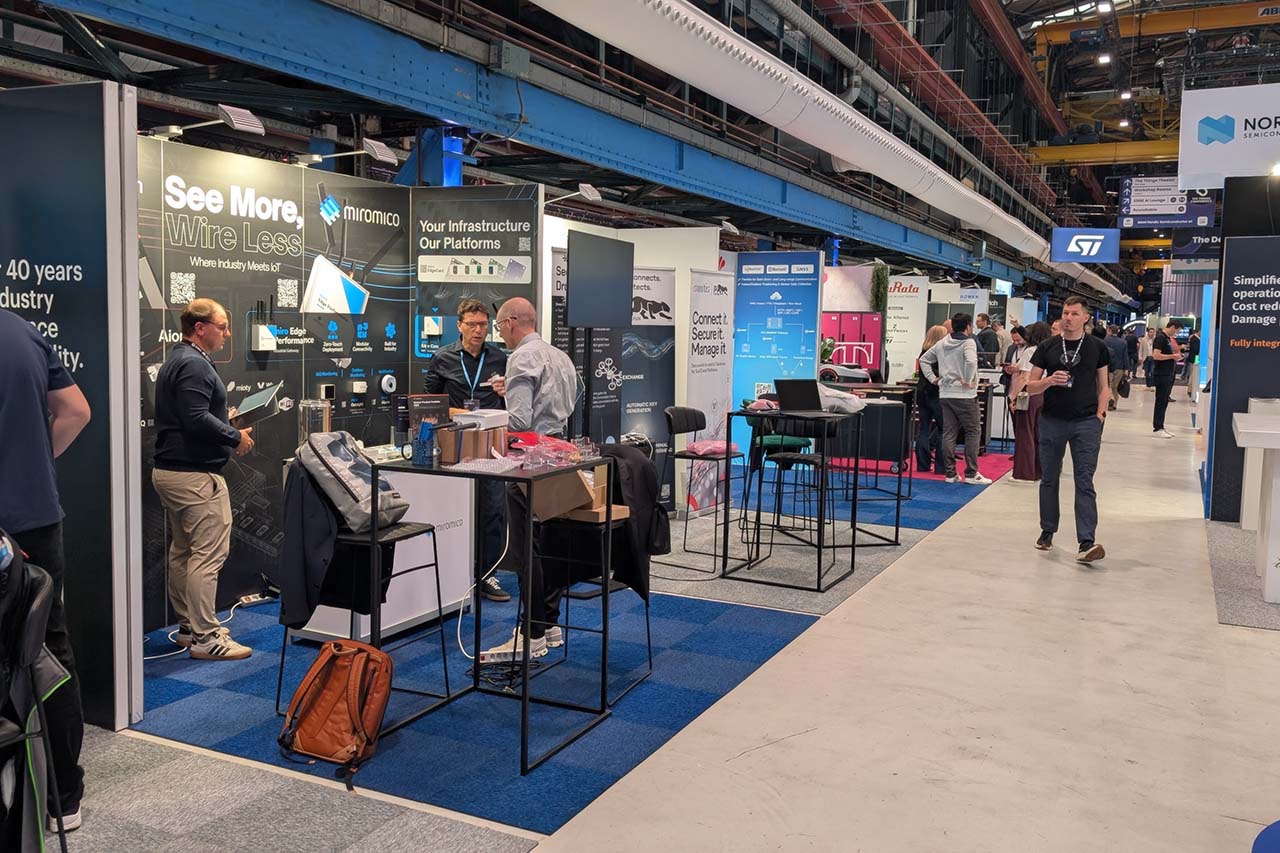
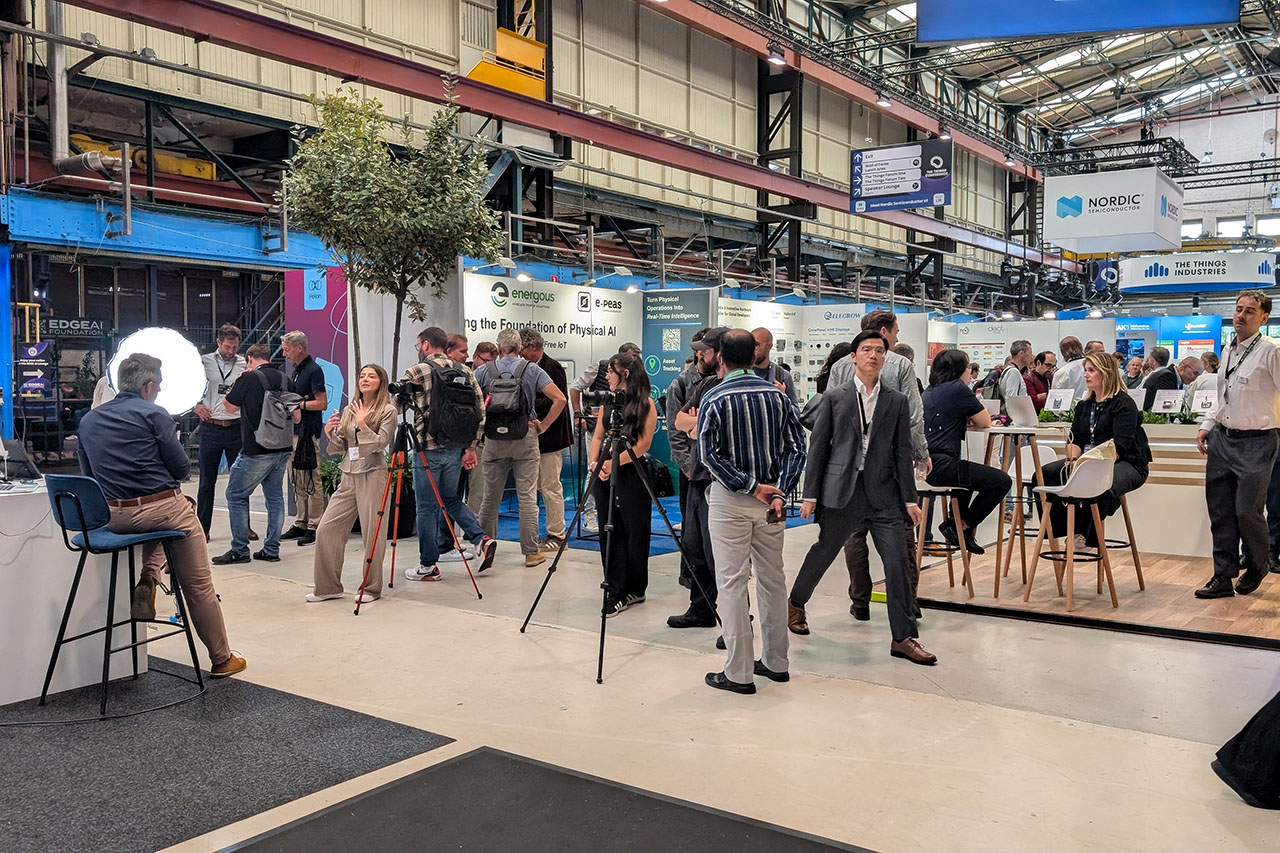
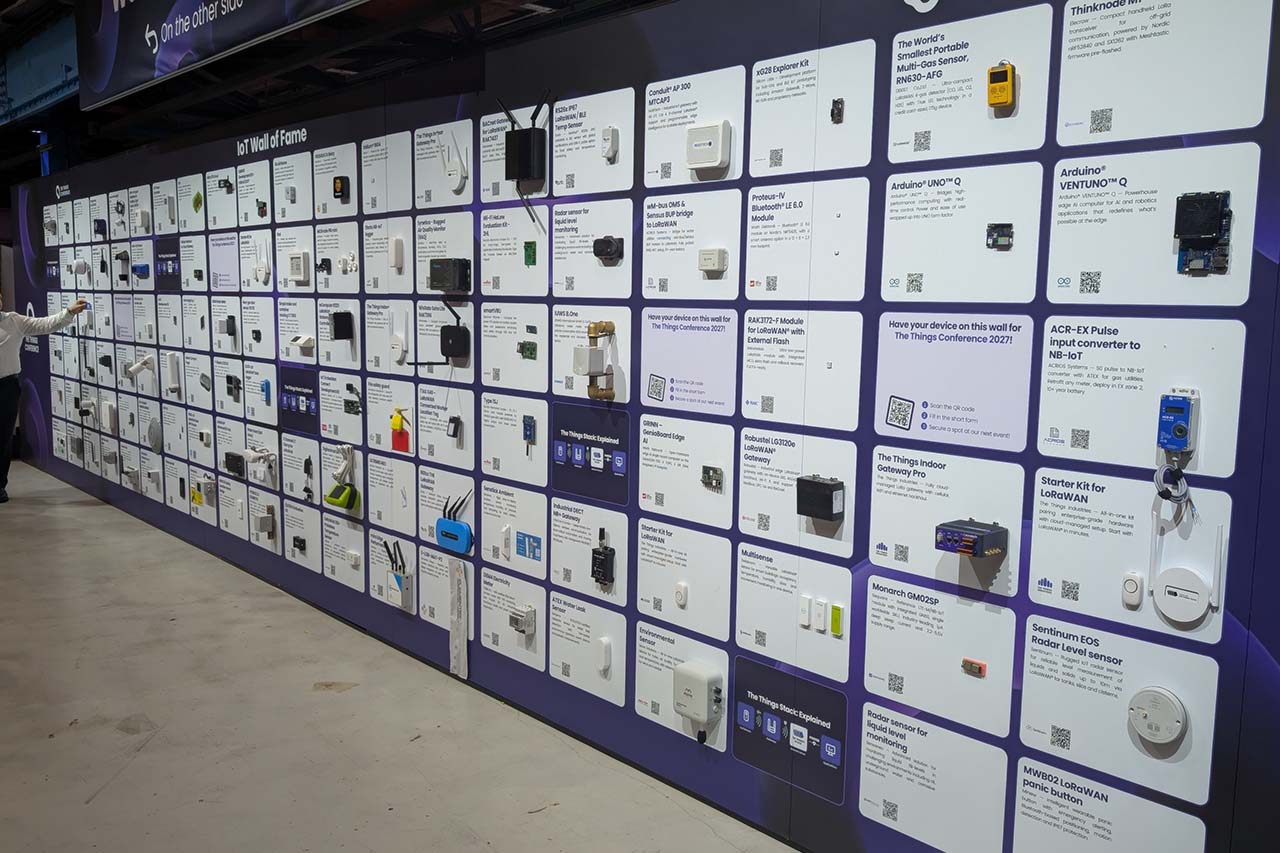
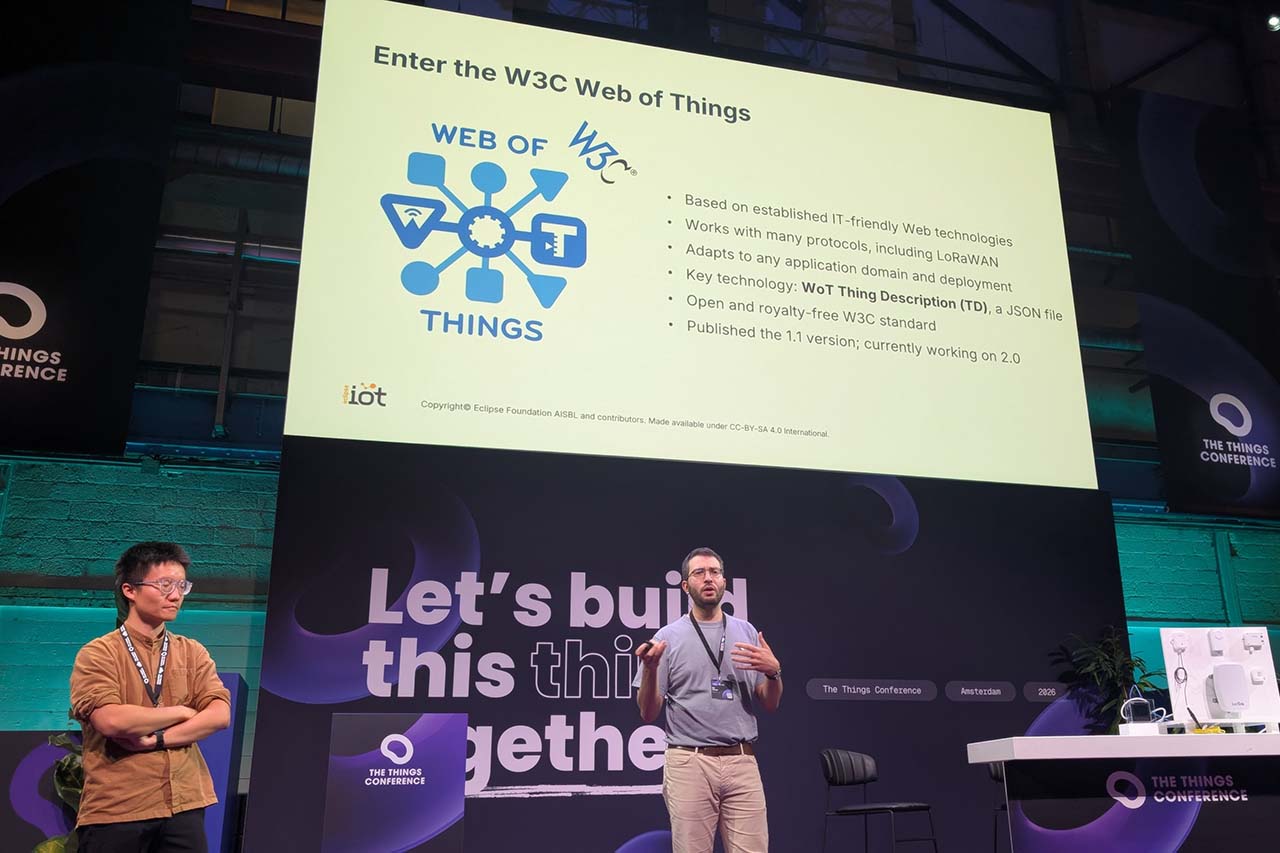
In the Kromhouthal, the company 't Kromhout used to build marine engines; since 2012, the old engine factory has served as an event venue. The brick walls, steel girders, and heavy overhead cranes under the roof have remained. This year's motto was "Put Your Demo Where Your Mouth Is". According to the organizer, there were over 2,000 visitors from more than 80 countries, around 180 presentations and workshops, as well as over 100 exhibitors.
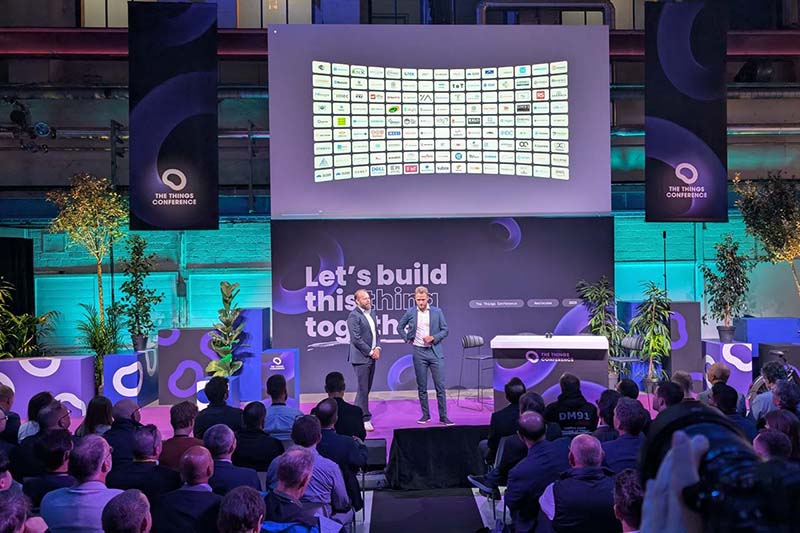
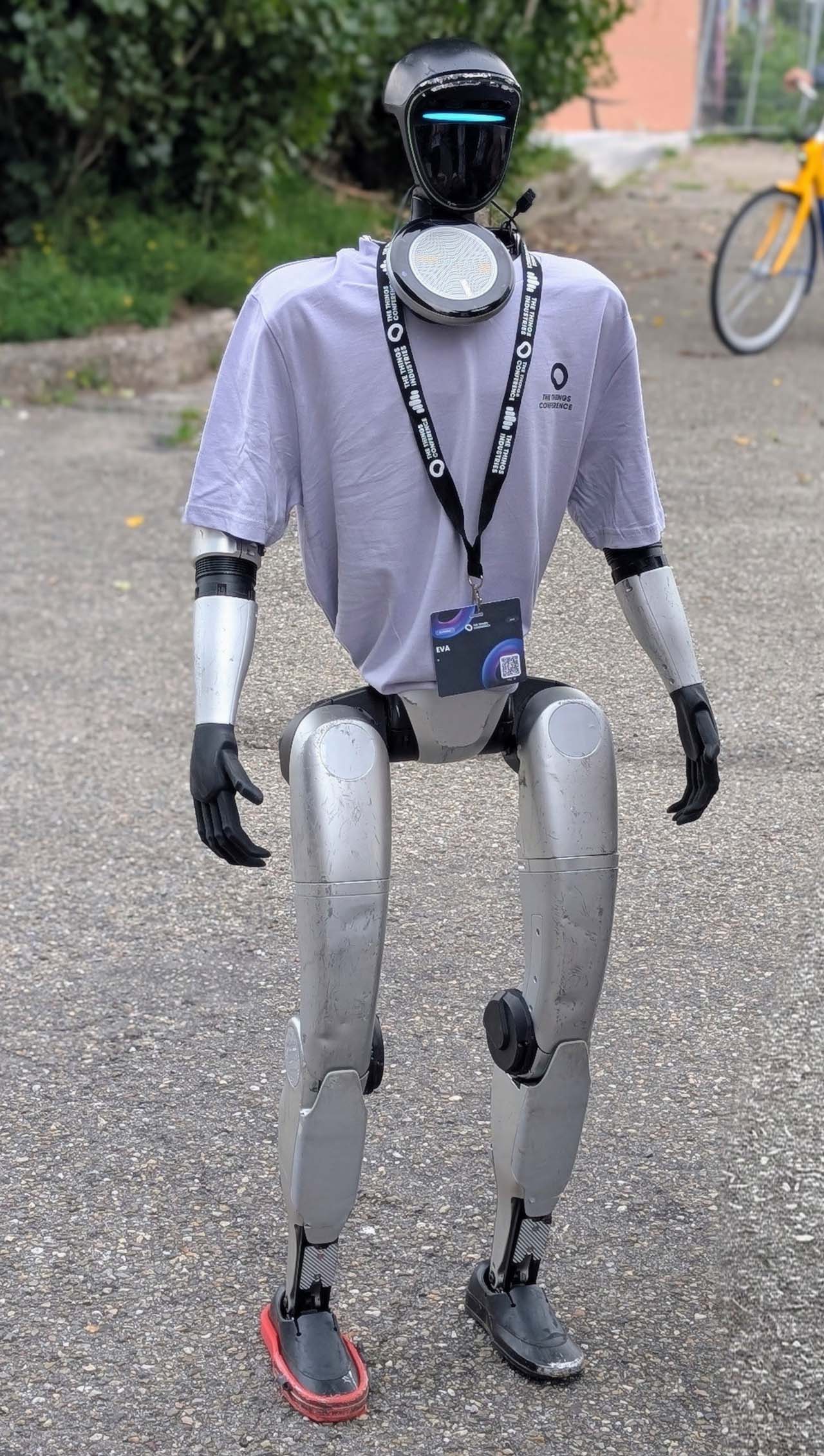
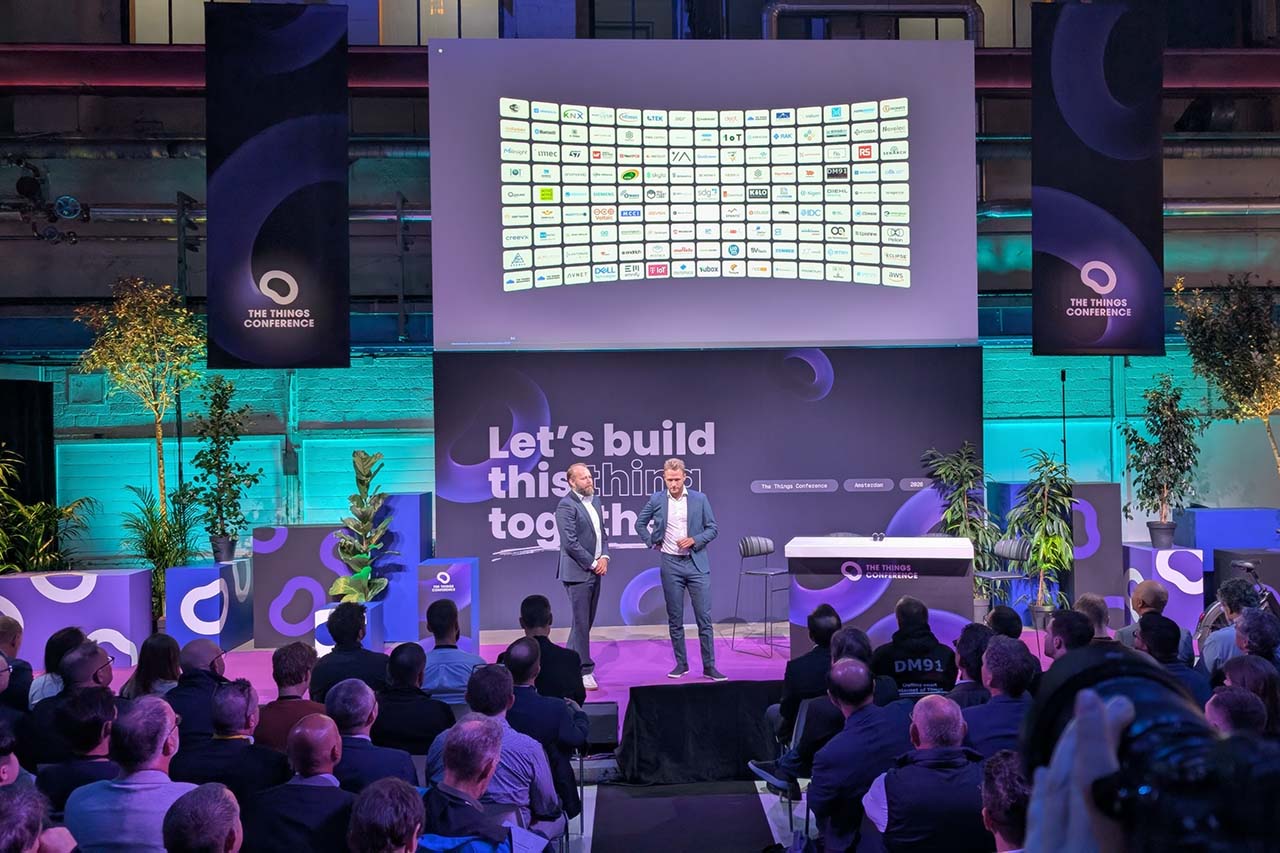
Besides the booths, there was the Demo Stage, the Things Theater for the large presentations, and several rooms for the workshops. A humanoid robot named EVA also walked around wearing its own conference badge.
Tour of the Conference
Most exhibitors are, of course, interested in industrial customers. Nevertheless, everyone was also very friendly to me as a simple maker, took their time, and answered my questions. Here are the booths that stood out in my memory the most.
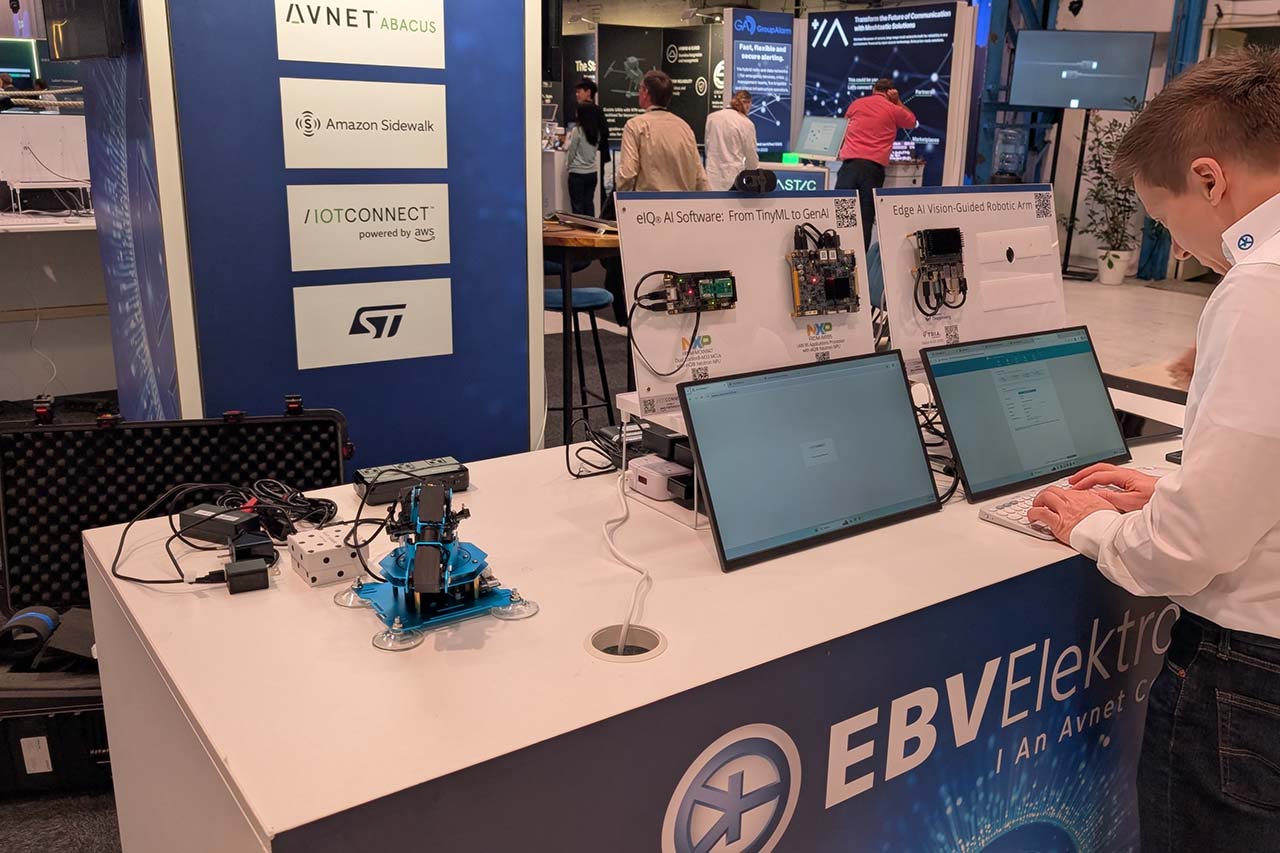
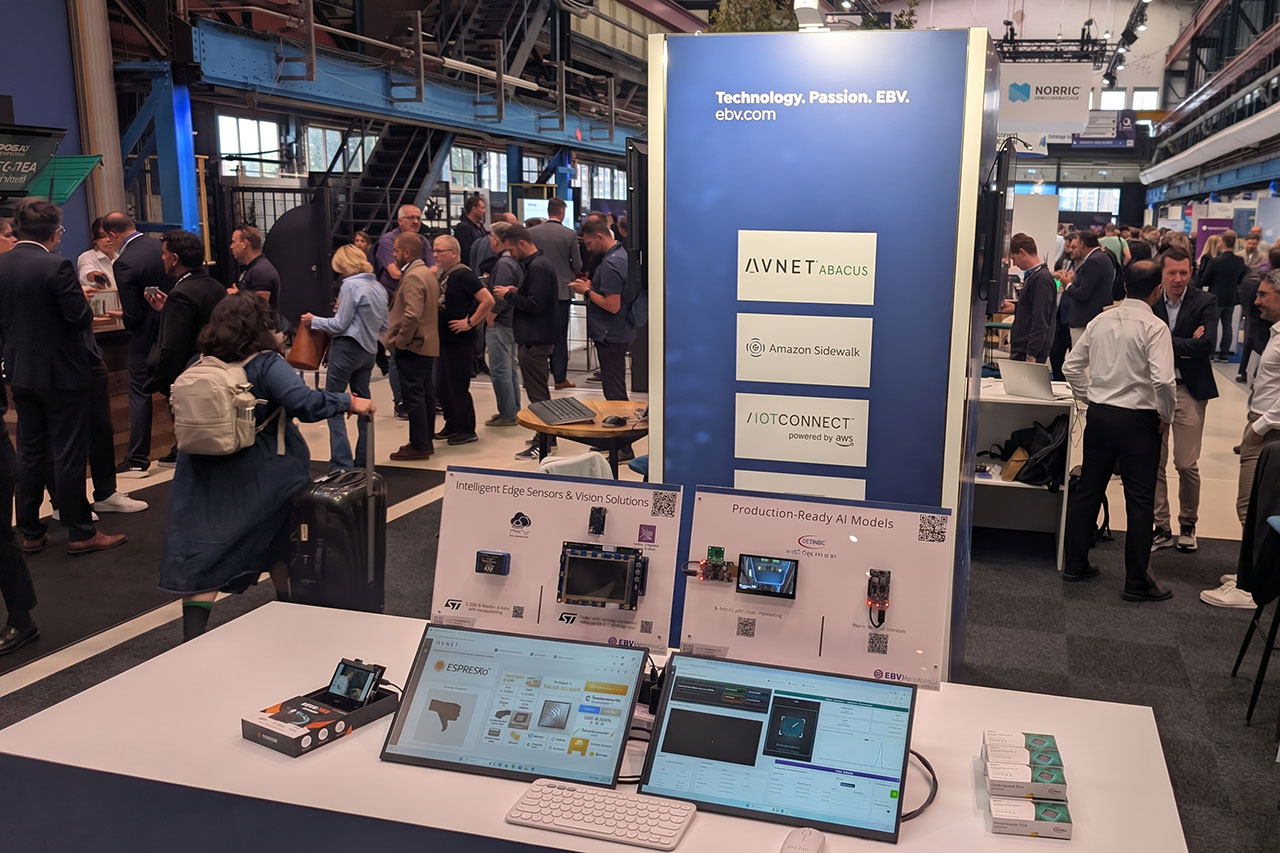
EBV Elektronik and the PSOC Edge E84 AI Kit
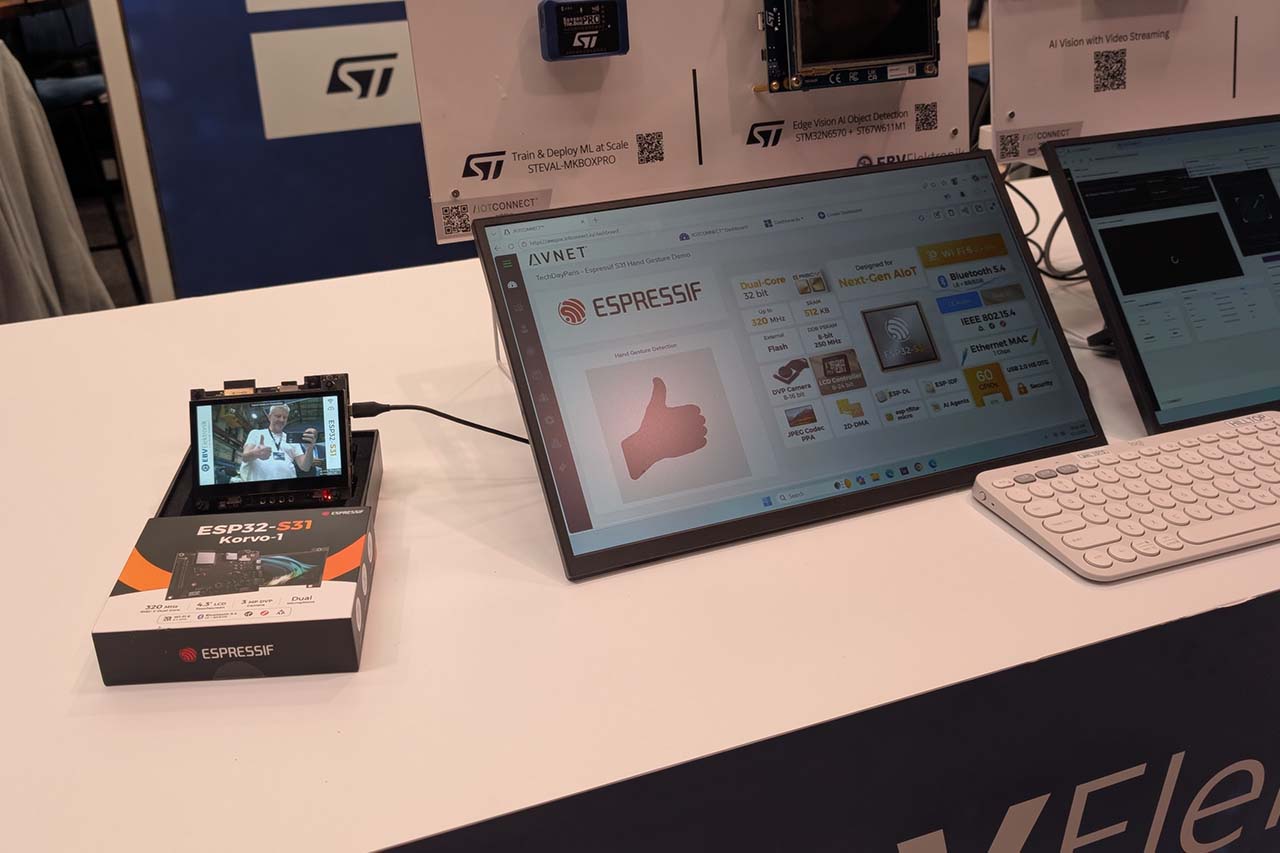
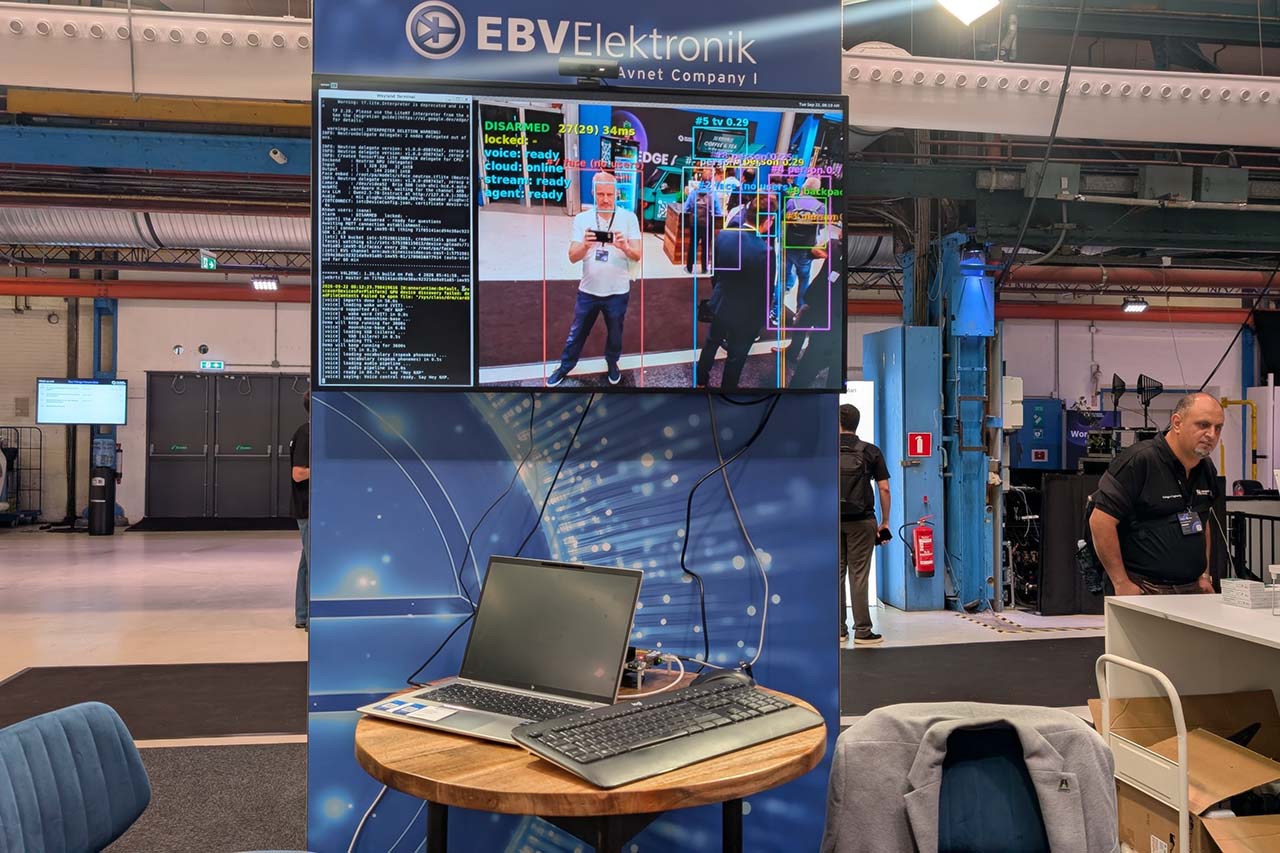
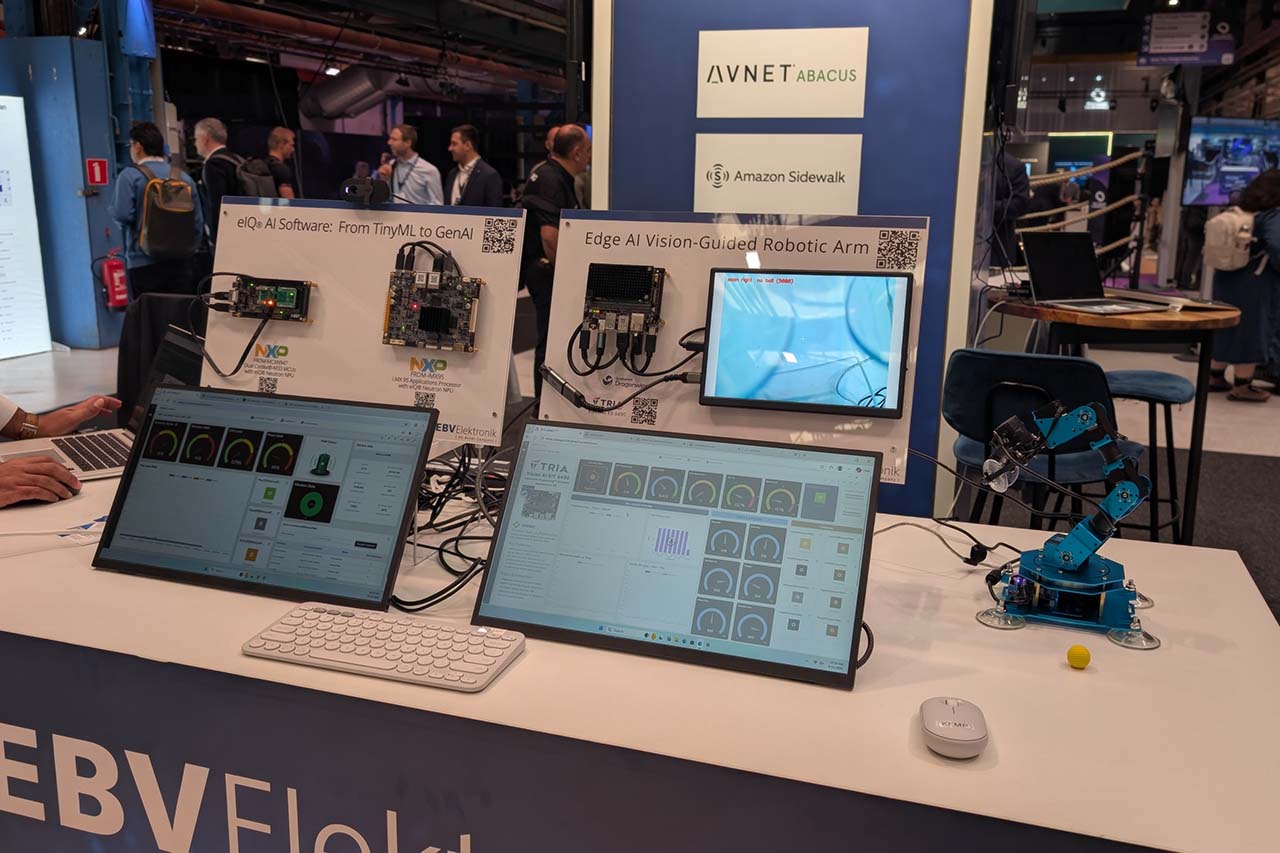
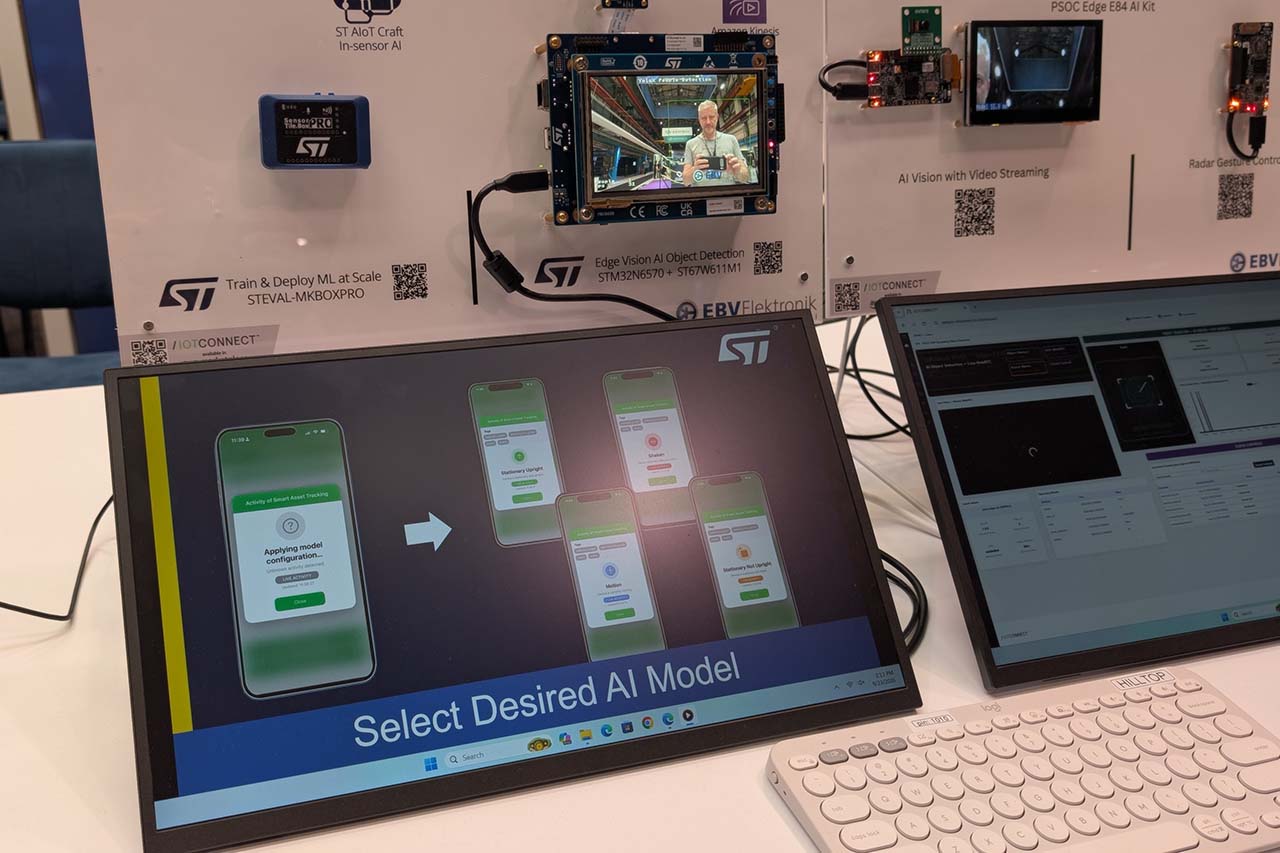
EBV Elektronik is a semiconductor distributor based in Poing near Munich, founded in 1969 and today a part of Avnet. Numerous edge AI demos were running at their booth, including object recognition on an STM32N6, a robotic arm with camera control on NXP hardware, and gesture recognition on the brand new ESP32-S31 Korvo-1. The ESP32-S31 has been in mass production since late July 2026 and features two RISC-V cores at 320 MHz, Wi-Fi 6, Bluetooth 5.4, and Thread.
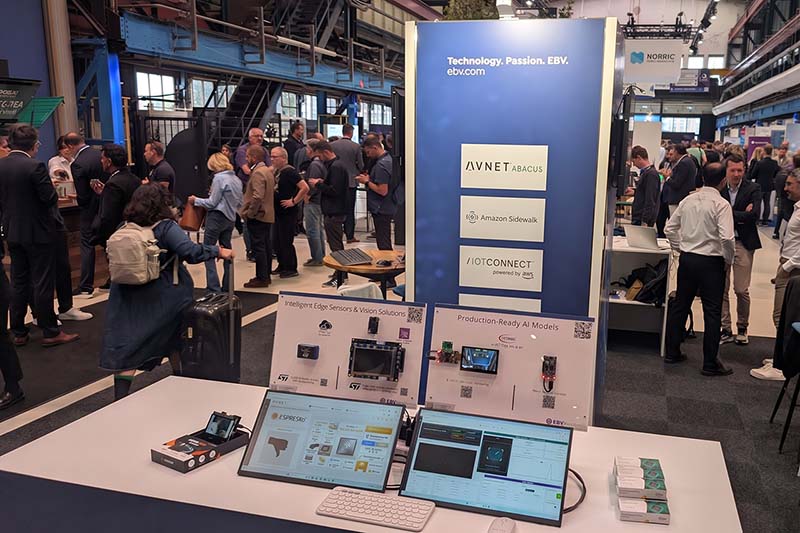
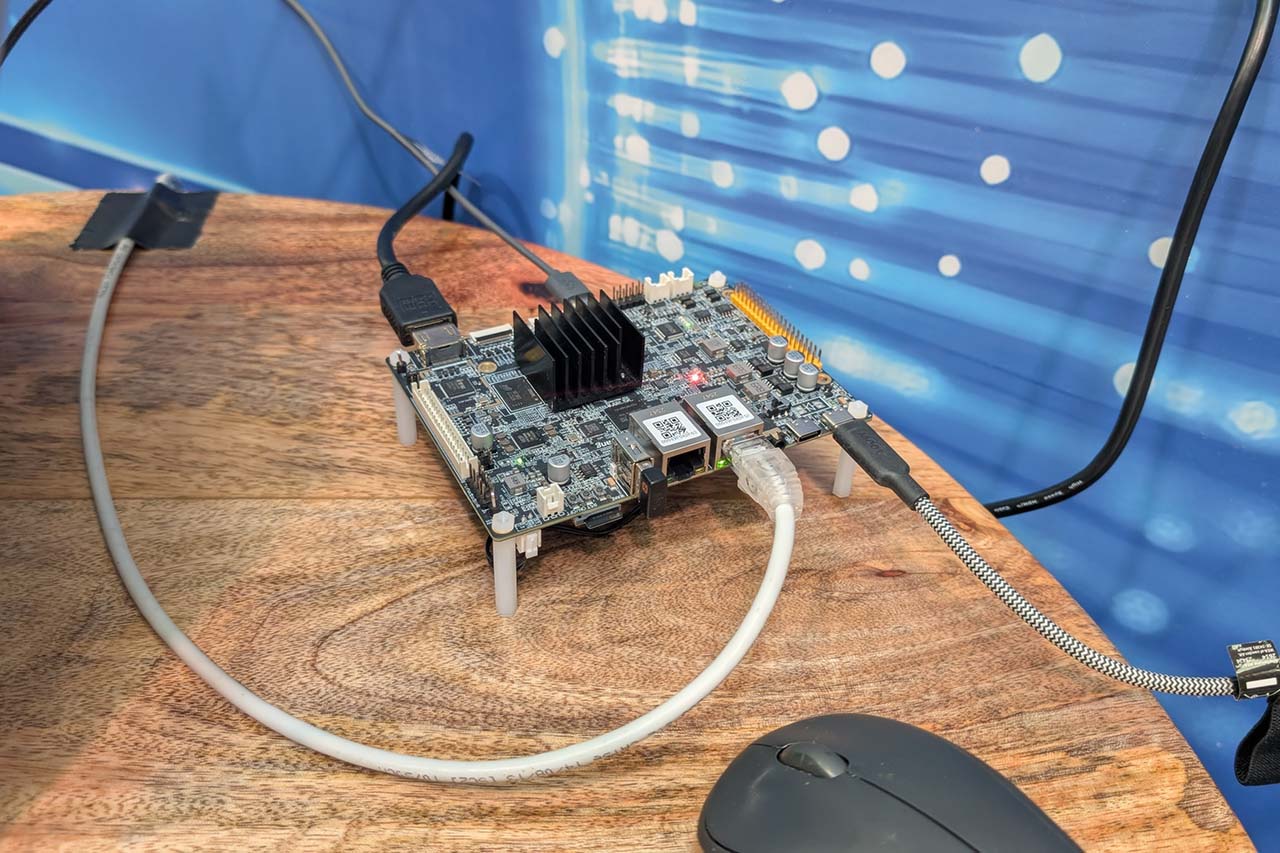
What interested me most, however, was the PSOC Edge E84 AI Kit from Infineon. The microcontroller combines a 400 MHz Cortex-M55, a Cortex-M33, and an Arm Ethos-U55 NPU for neural networks. After I explained that I am a tech blogger, EBV gave me one of these boards. I would expressly like to thank them for that here! There will be a separate article about the board.
Semtech and the LR2021
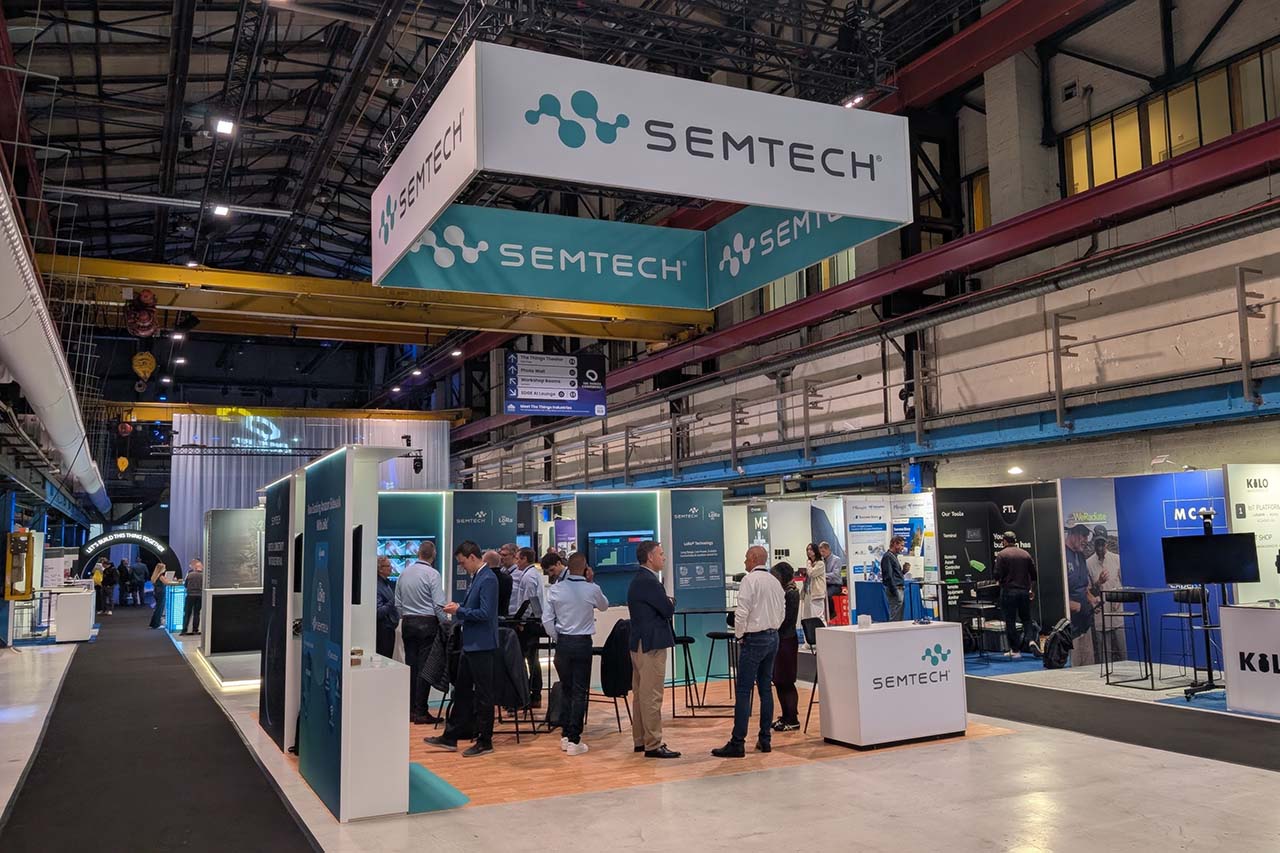
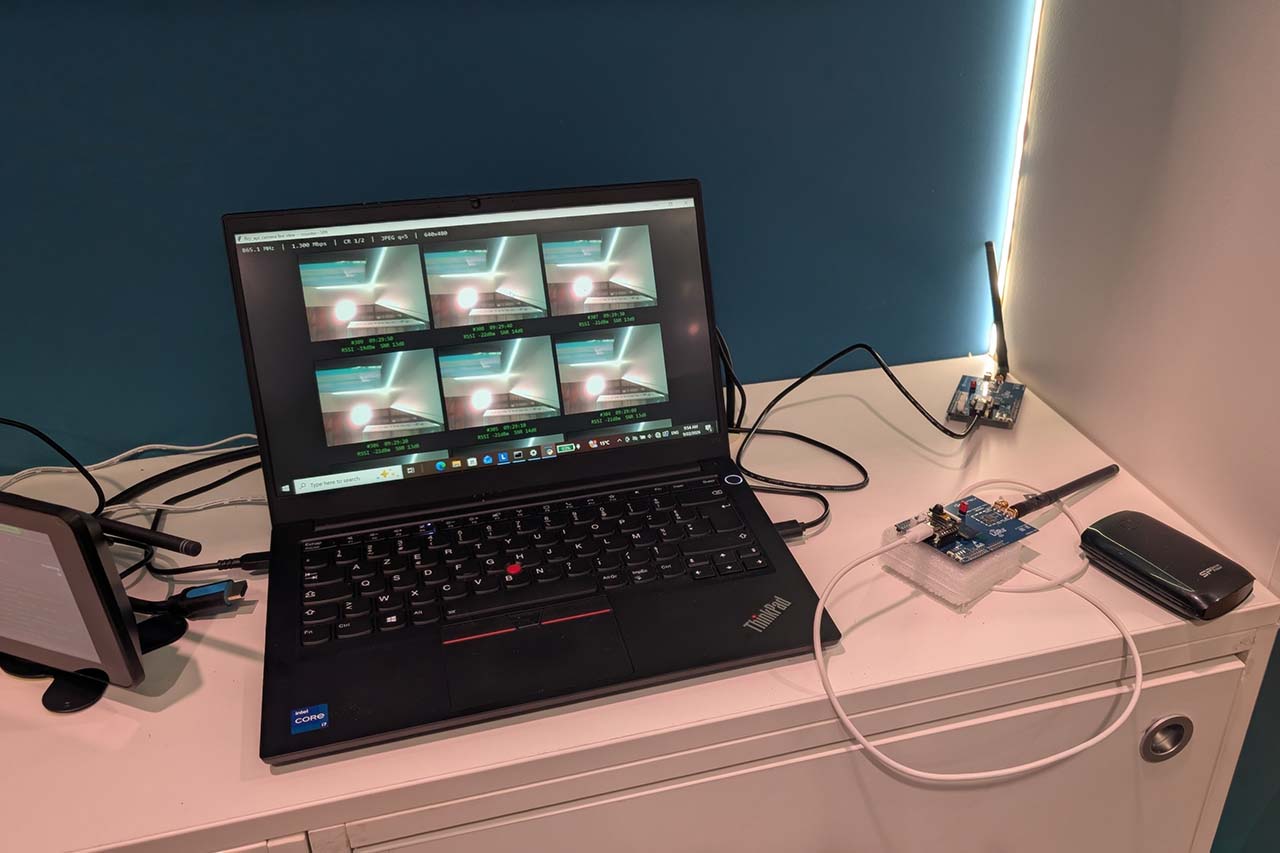
Semtech is the company behind LoRa and had one of the largest booths right in the center of the hall. The main showcase was the LR2021, the first chip of the LoRa Plus family featuring the fourth LoRa generation. Besides classic LoRa at up to 200 kbps, it supports FLRC (Fast Long Range Communication) at up to 2.6 Mbps, and does so in both the sub-GHz range and at 2.4 GHz.
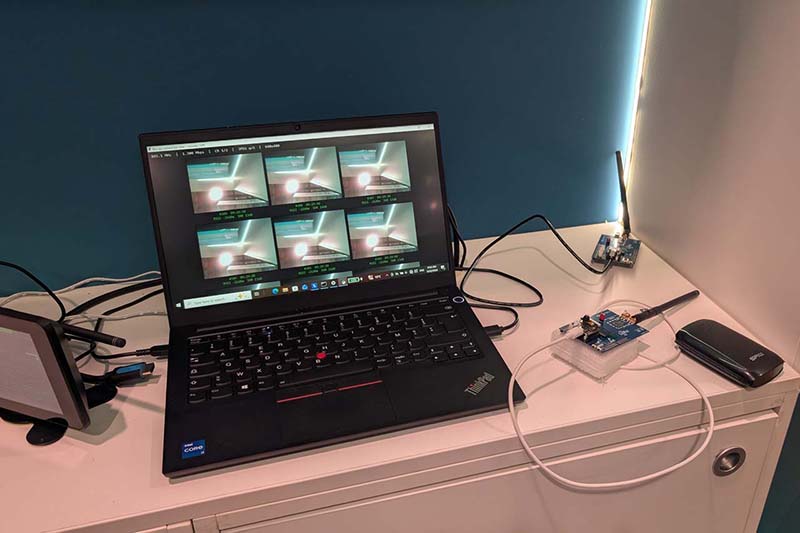
A demo with camera images showed what this means in practice. Over an FLRC connection at 1.3 Mbps, 640 × 480 pixel JPEG images were continuously transmitted.
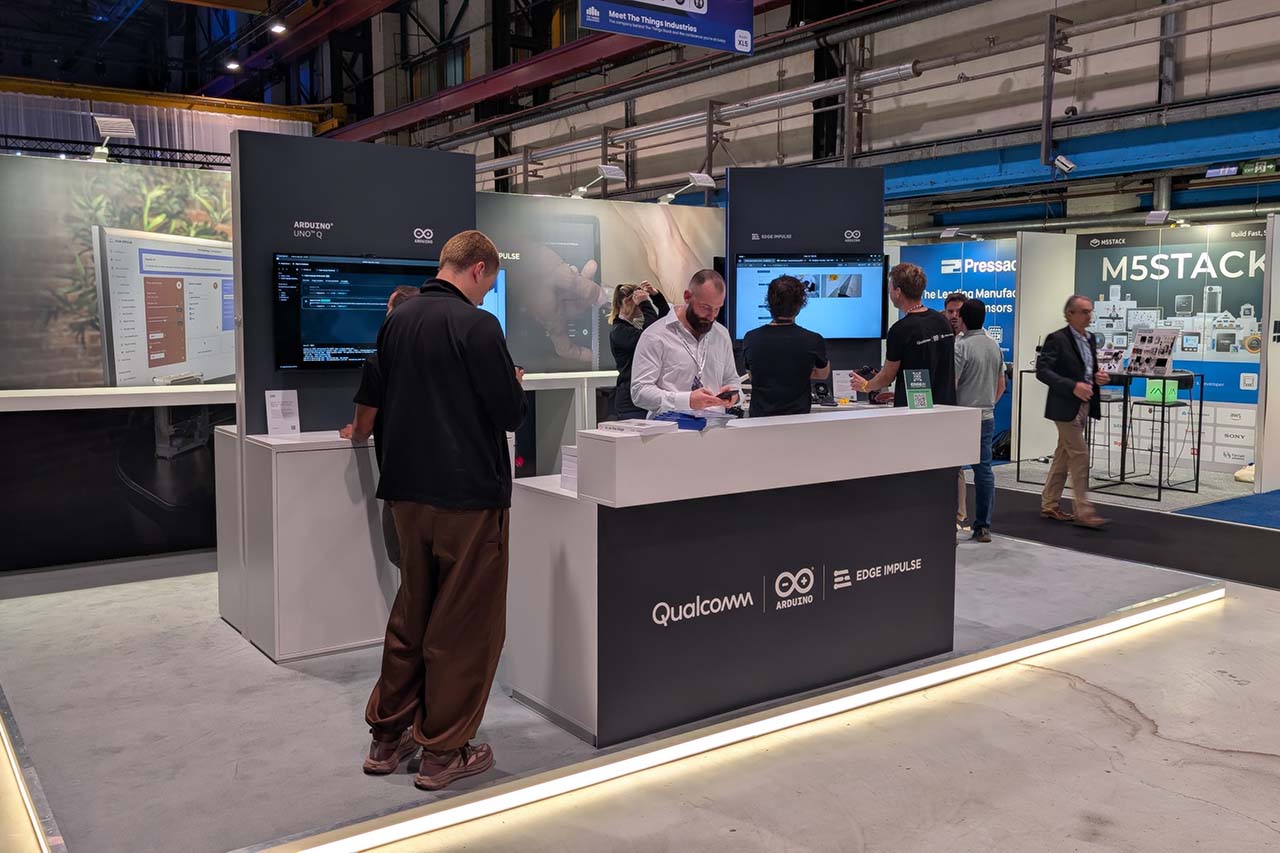
Qualcomm, Arduino and Edge Impulse
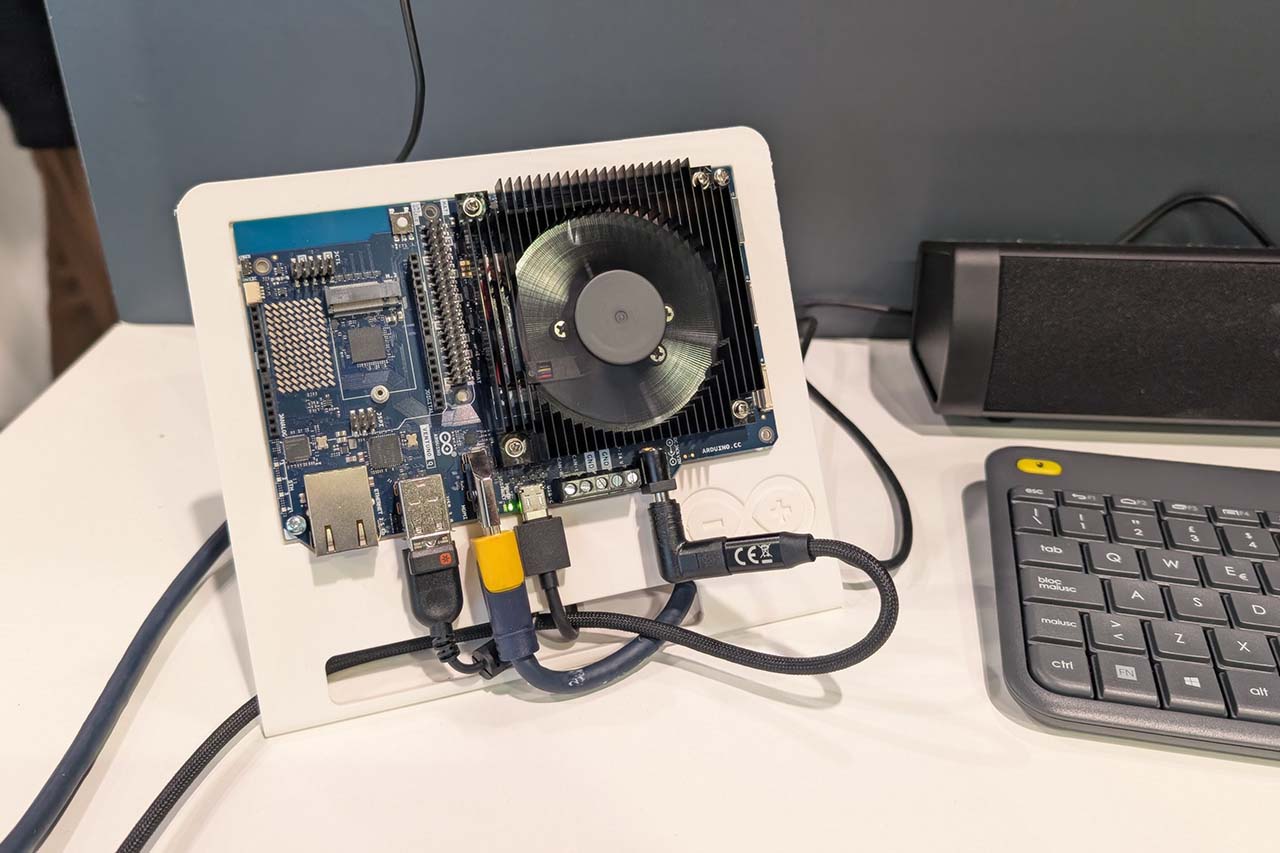
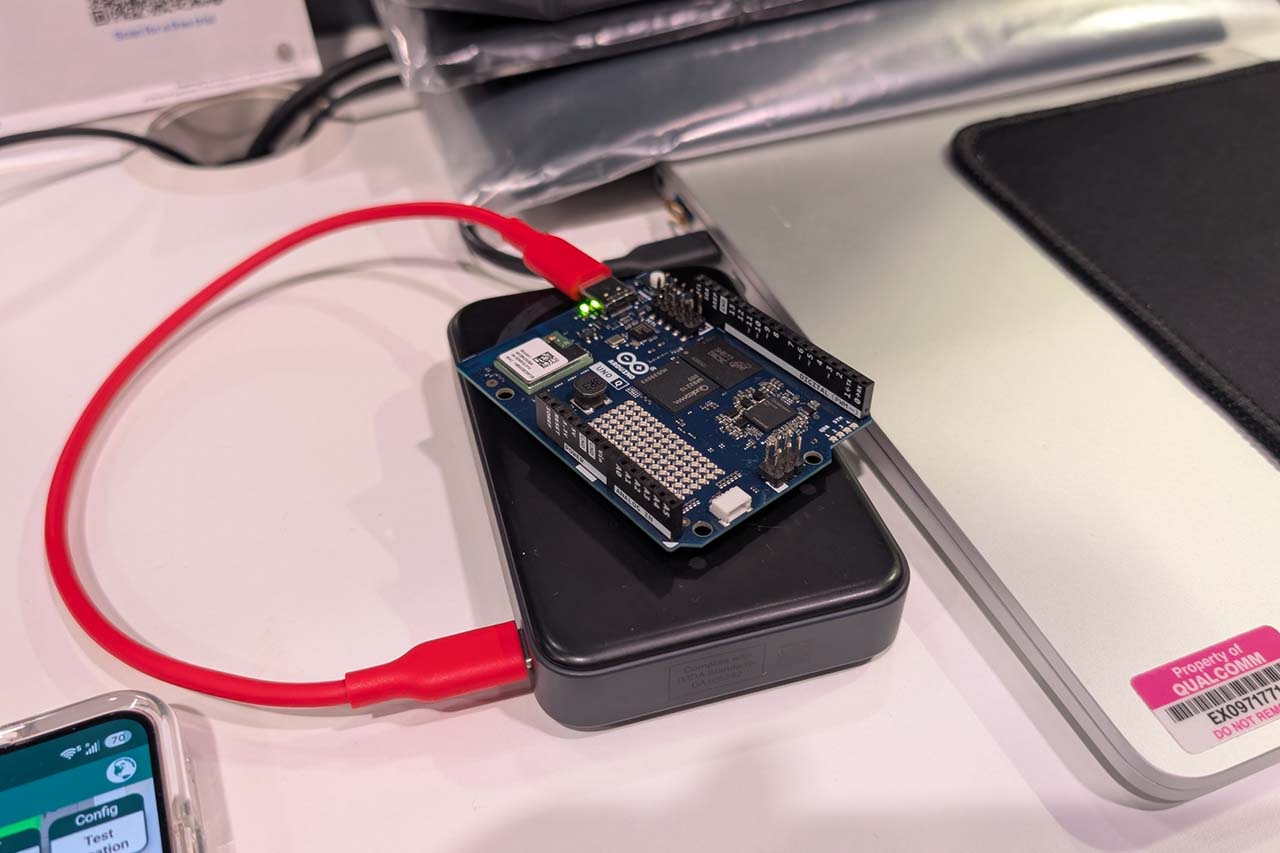
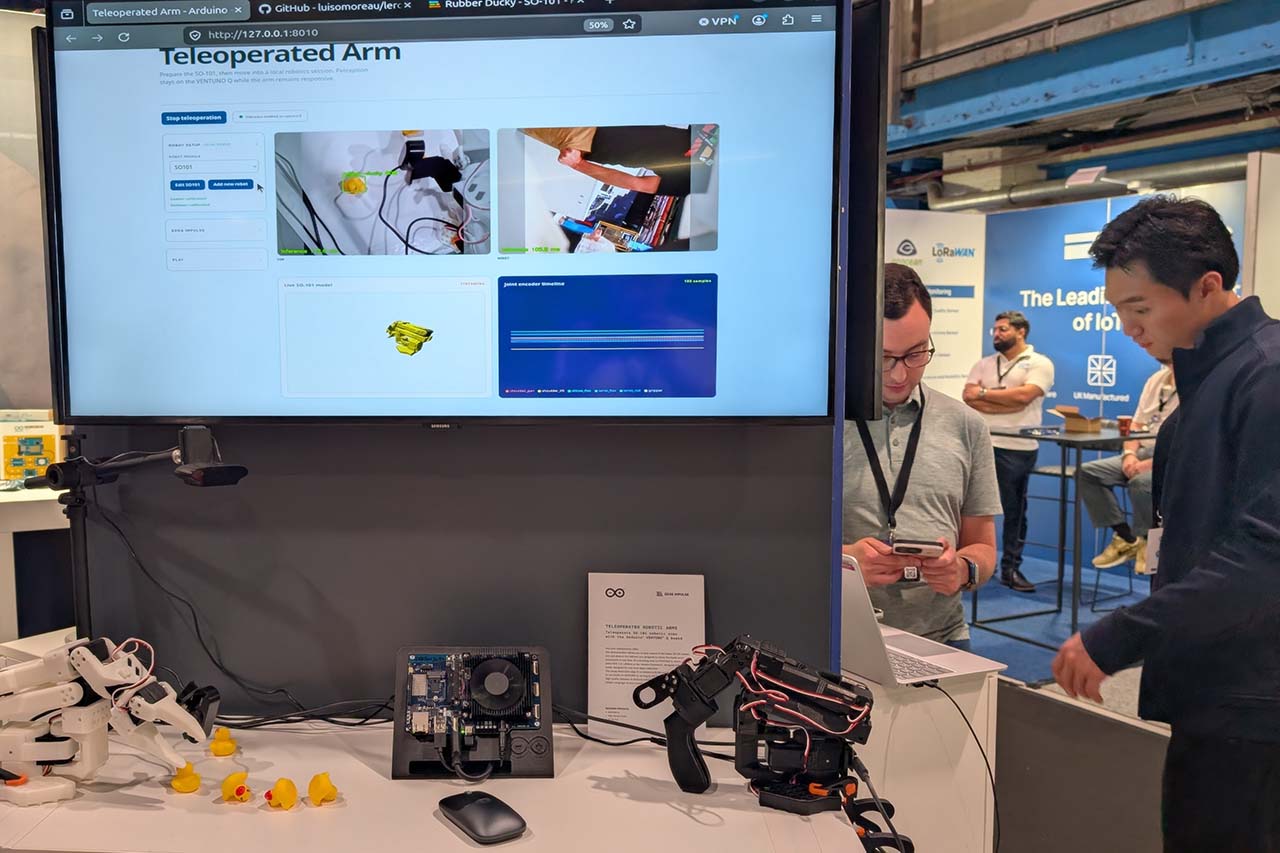
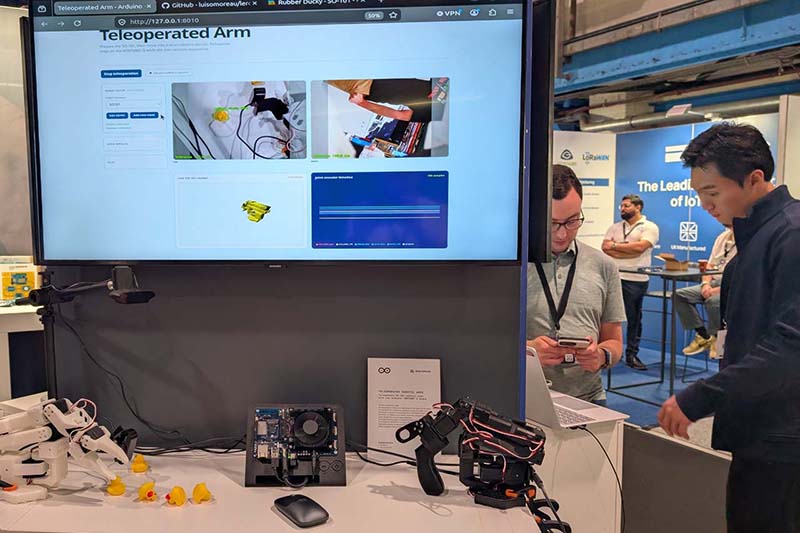
Qualcomm acquired Arduino in October 2025, and at the conference, it was clearly visible what is coming of it. The Arduino UNO Q combines a Qualcomm QRB2210 running Linux with an STM32U585 for real-time tasks, all in the familiar UNO form factor. One size larger is the Arduino VENTUNO Q featuring a Dragonwing IQ8, up to 40 TOPS of AI performance, and an STM32H5 as the microcontroller. In a demo, it controlled an SO-101 robotic arm via teleoperation that sorted rubber ducks.
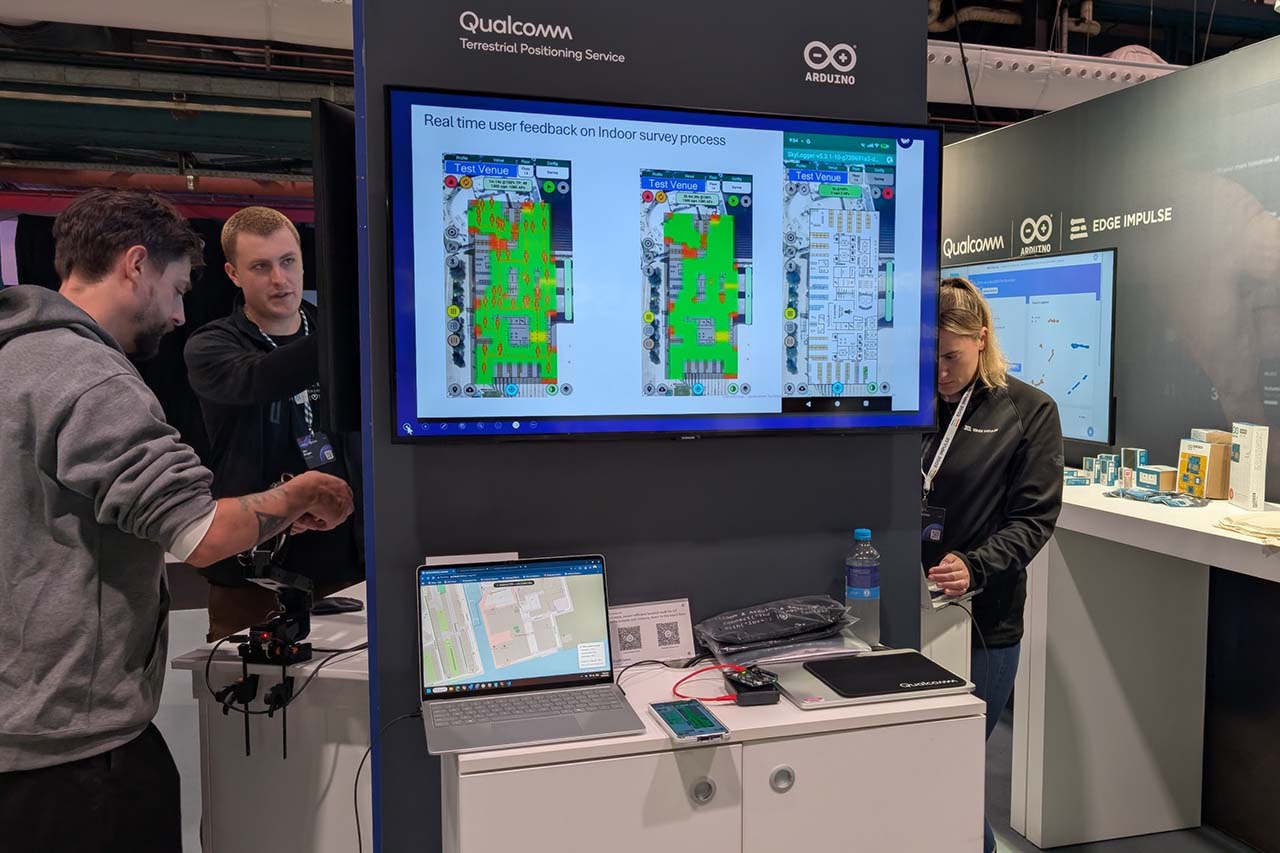
I was also highly impressed by Qualcomm's Terrestrial Positioning Service. It determines position via Wi-Fi access points, cellular network cells, and Bluetooth beacons—meaning even where GPS cannot reach. The booth featured a live demonstration of how a building is mapped for indoor positioning.
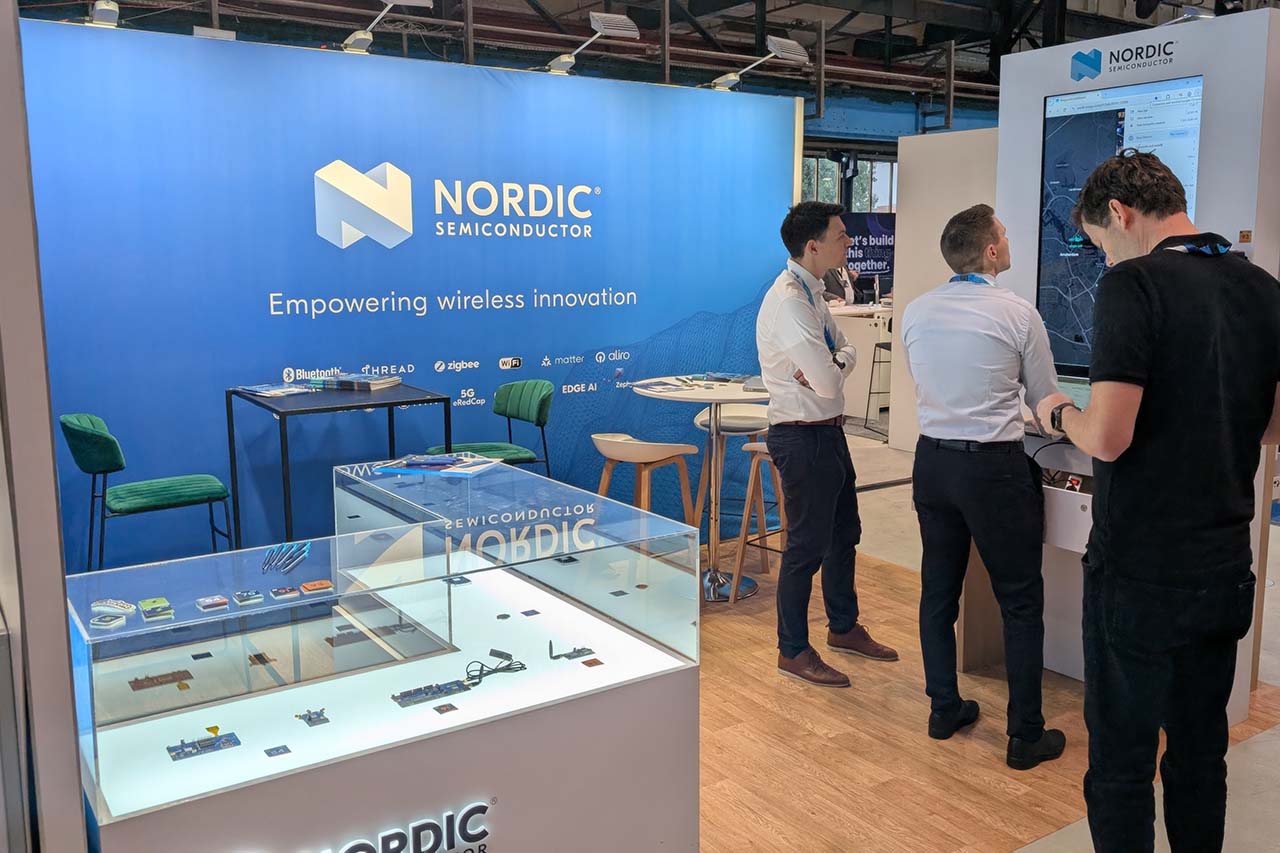
Nordic Semiconductor
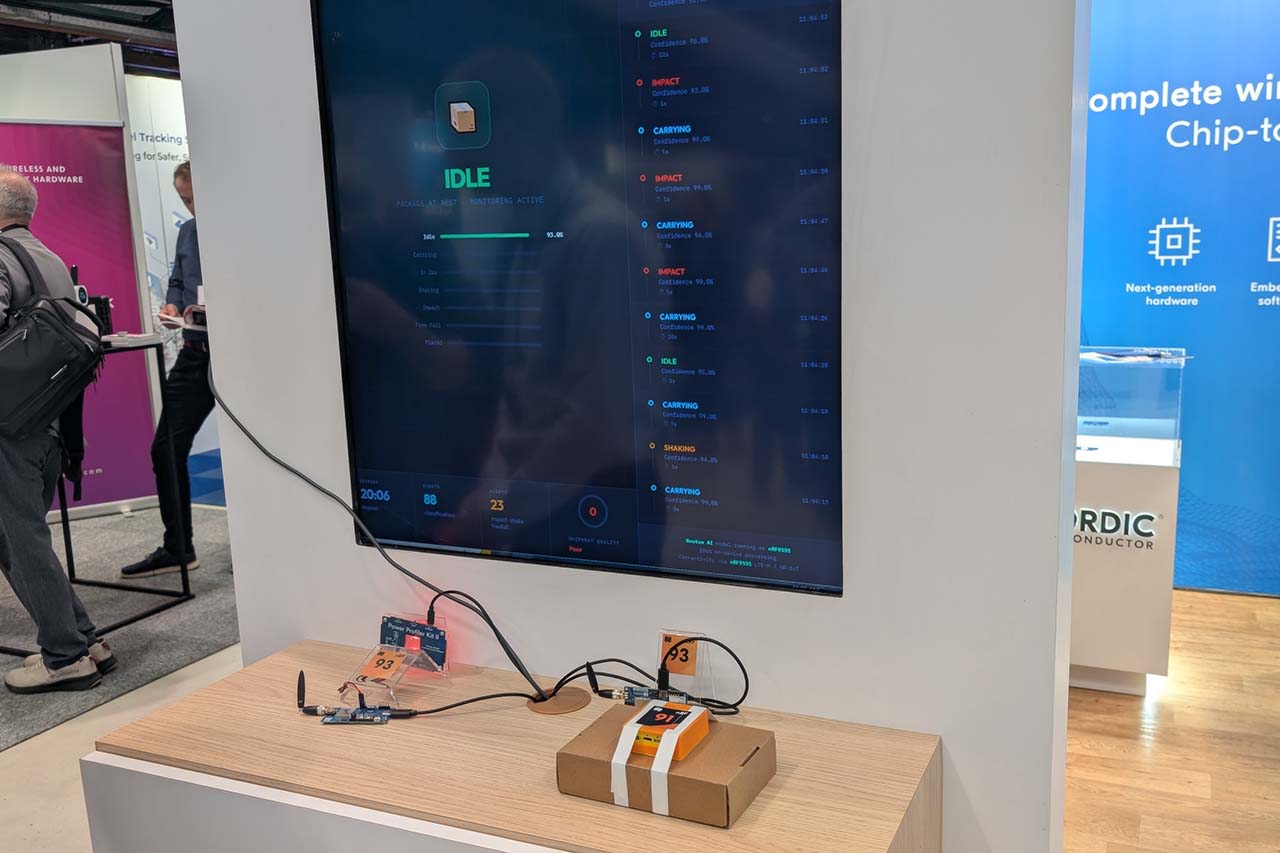
The Norwegian manufacturer Nordic Semiconductor is well-known to many makers for its Bluetooth chips. I found a package tracking demo particularly exciting. A sensor inside a cardboard box detects in real time whether the package is stationary, being carried, shaken, or dropped, and reports every impact.
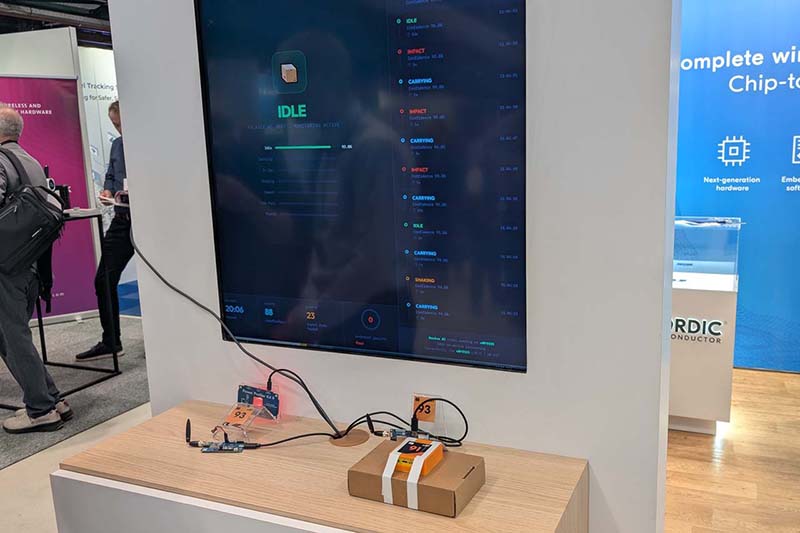
According to the screen, an AI model based on Neuton ran directly on the device for this purpose, with connectivity handled by the nRF9151 cellular module. Nordic acquired Neuton.AI some time ago and is thereby bringing very small neural networks to its chips.
MClimate
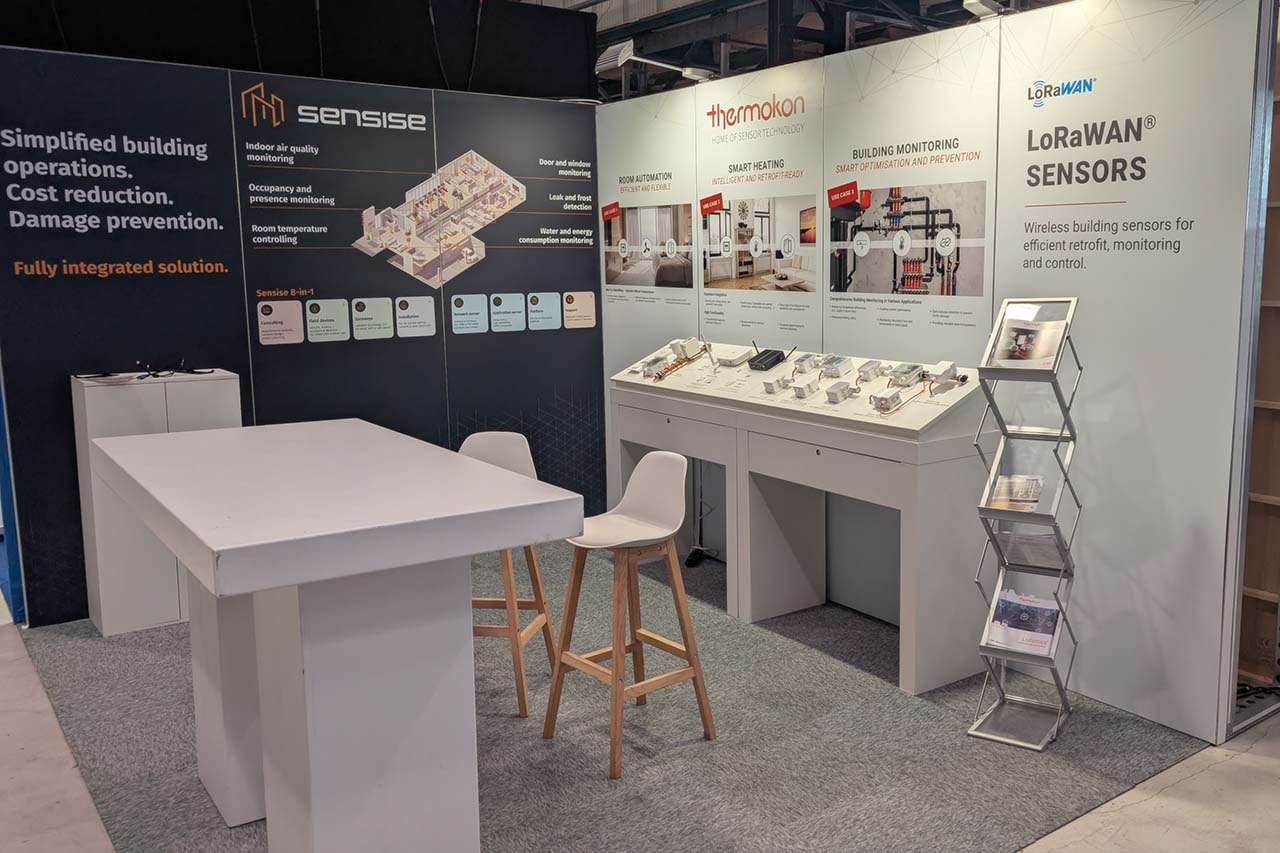
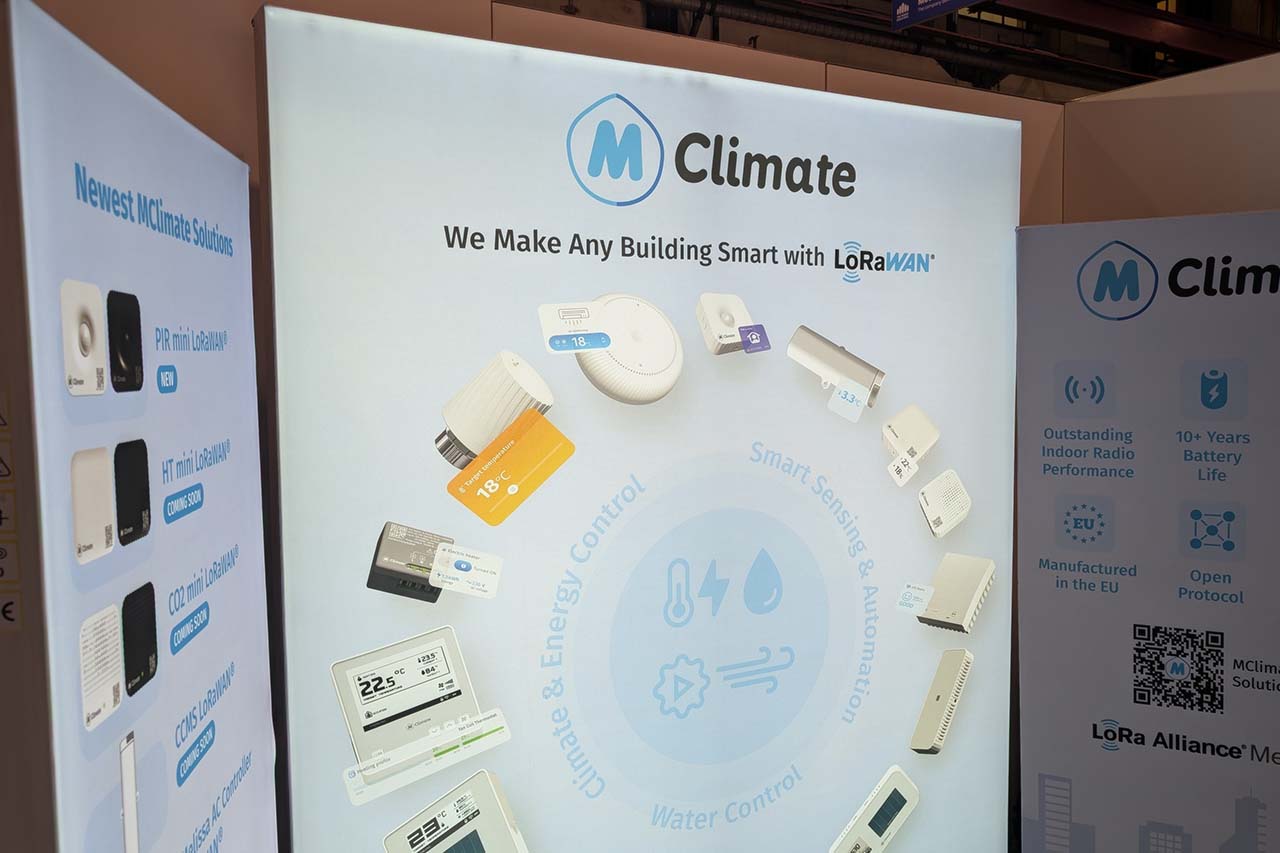
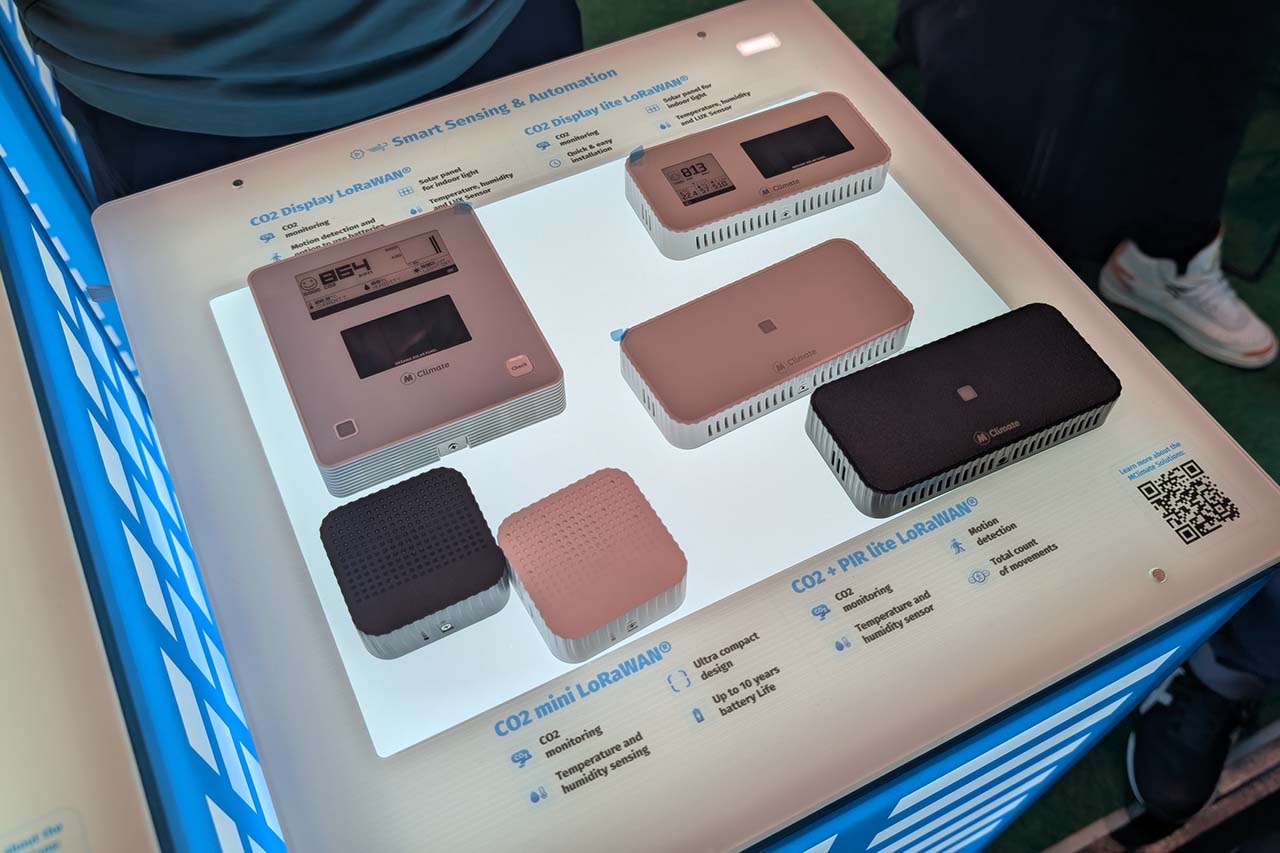
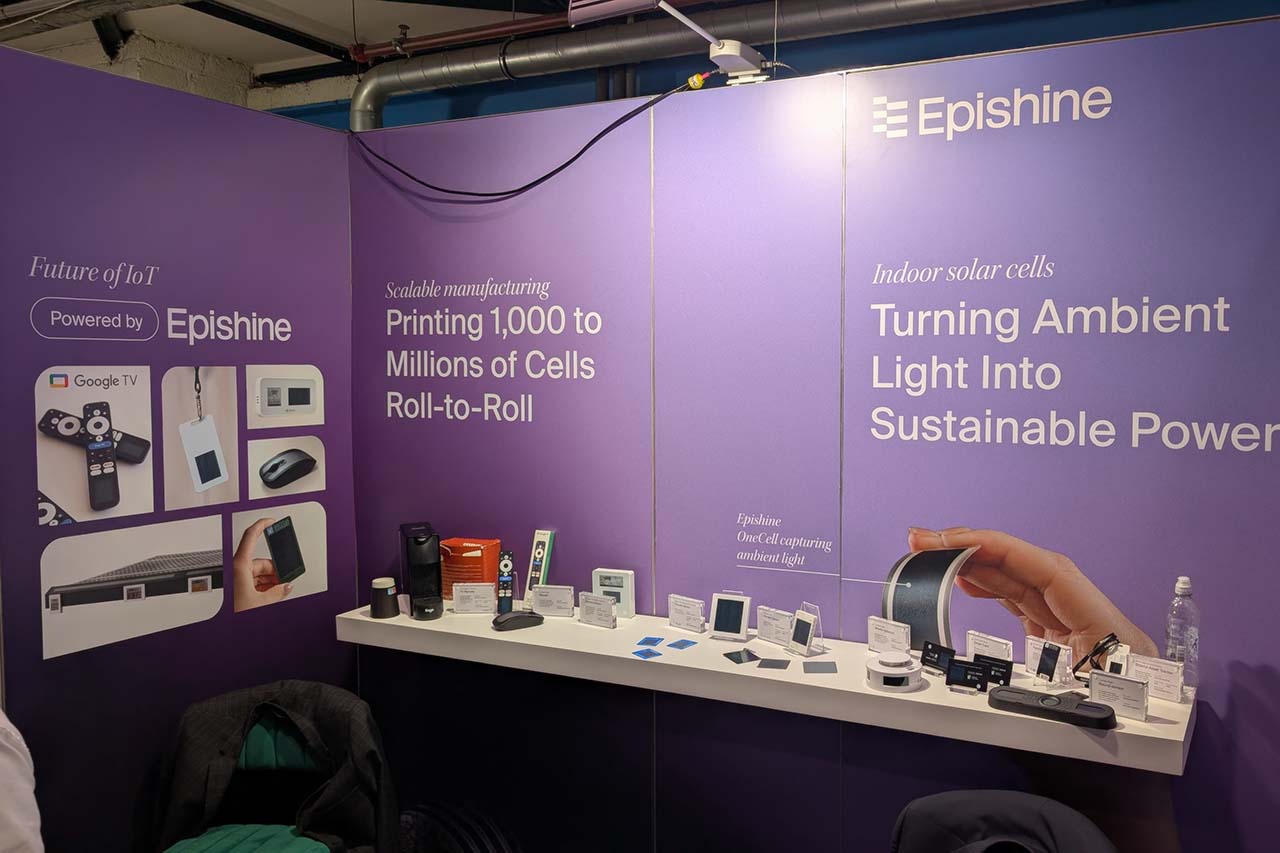
MClimate from Sofia, Bulgaria develops LoRaWAN devices for buildings: radiator thermostats, CO2 sensors, motion detectors, and water sensors. Some of the CO2 displays are powered by ambient room light via small solar cells from Epishine, while others are designed to last up to ten years on a single battery.
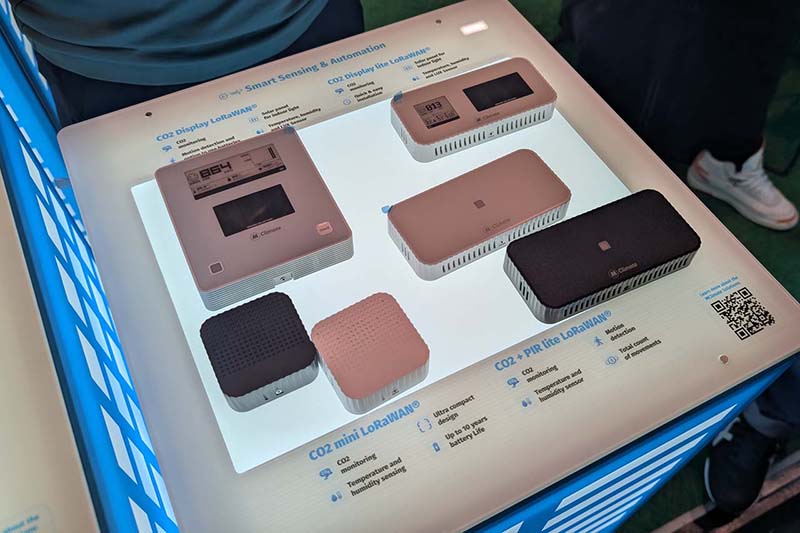
The sensors partly reminded me of my own weather station. Mine can do much more, of course. ;-)
Elecrow
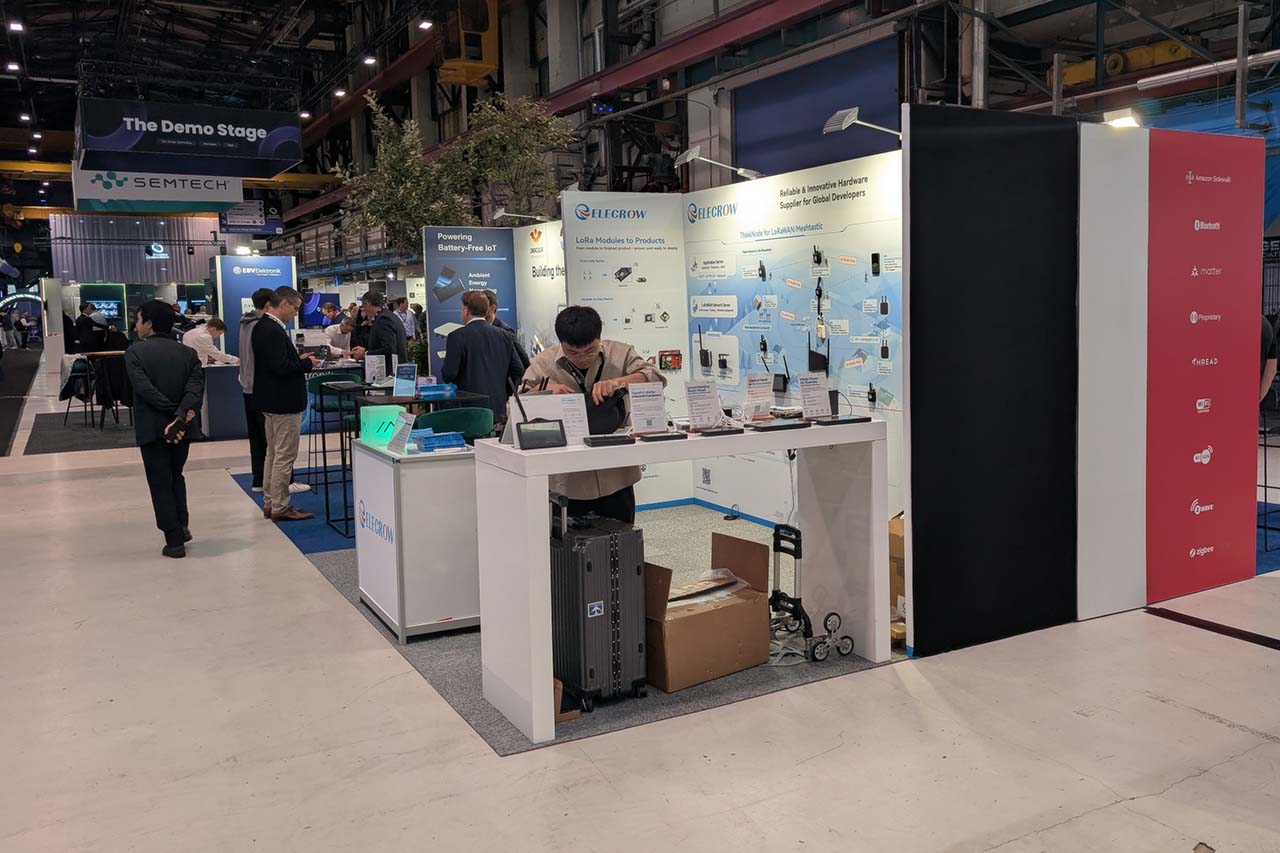
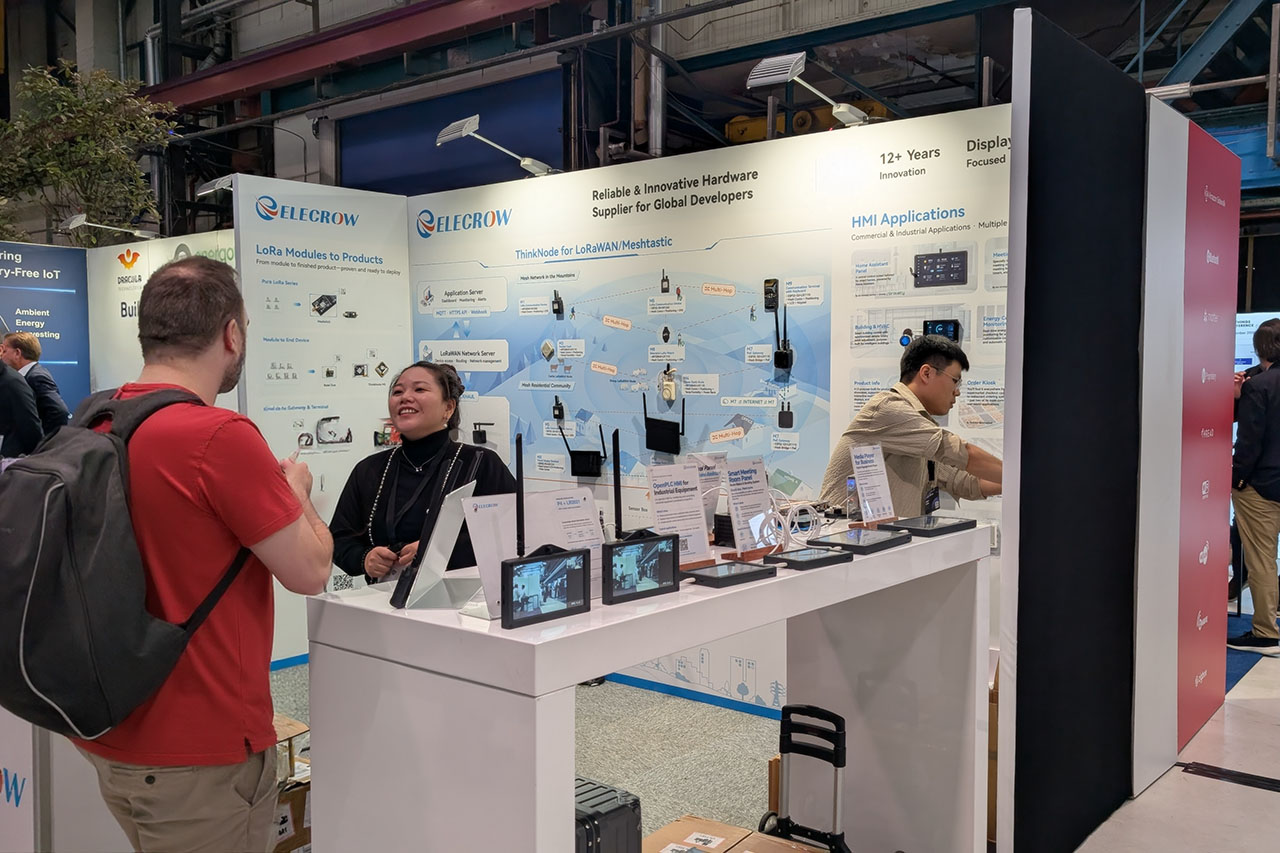
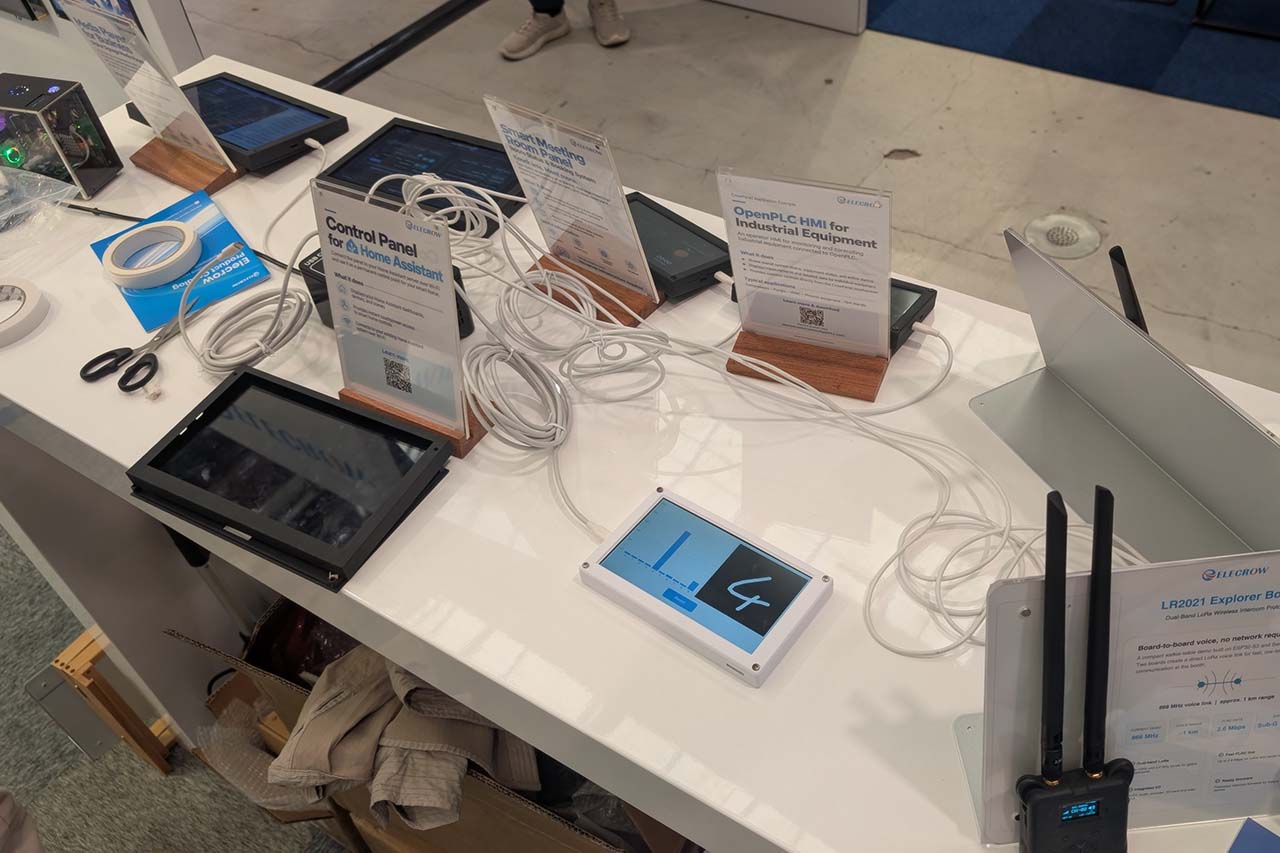
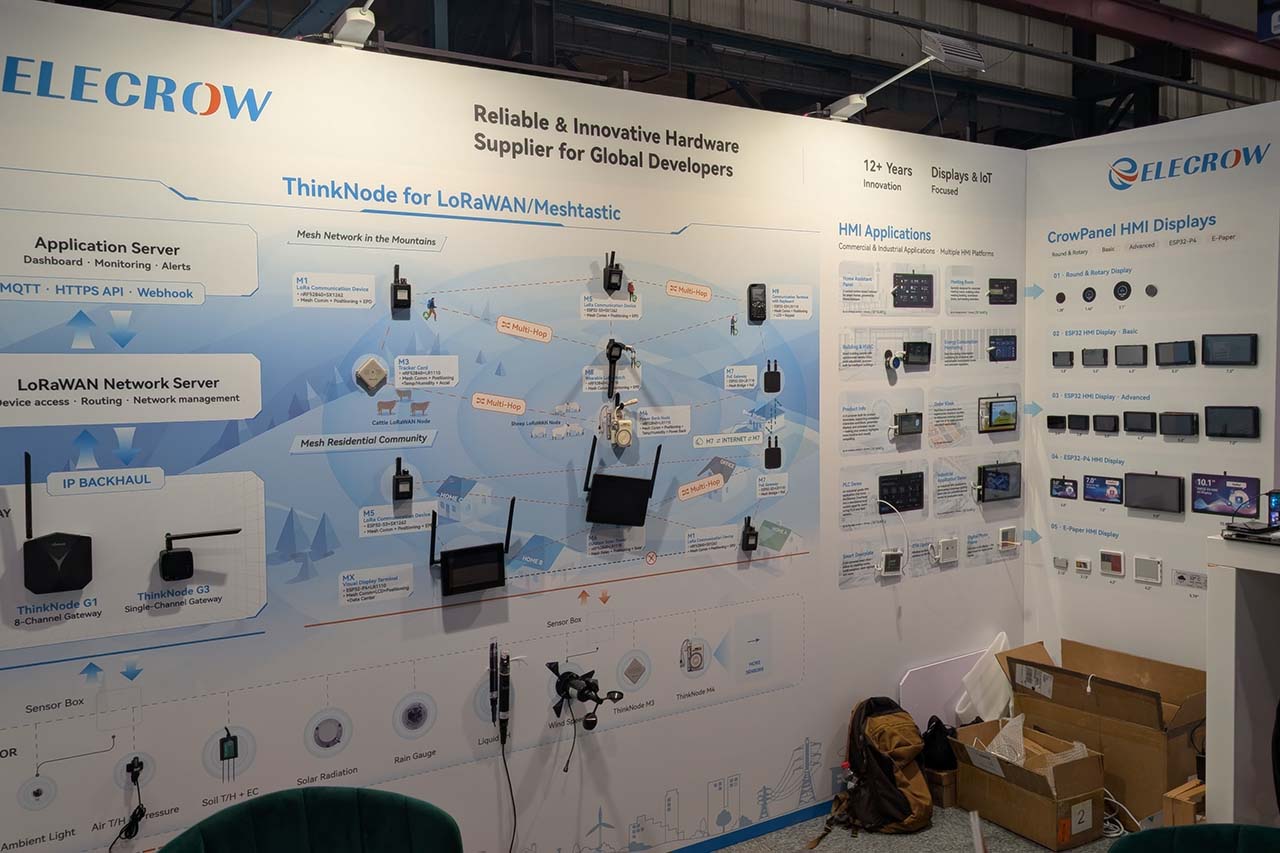
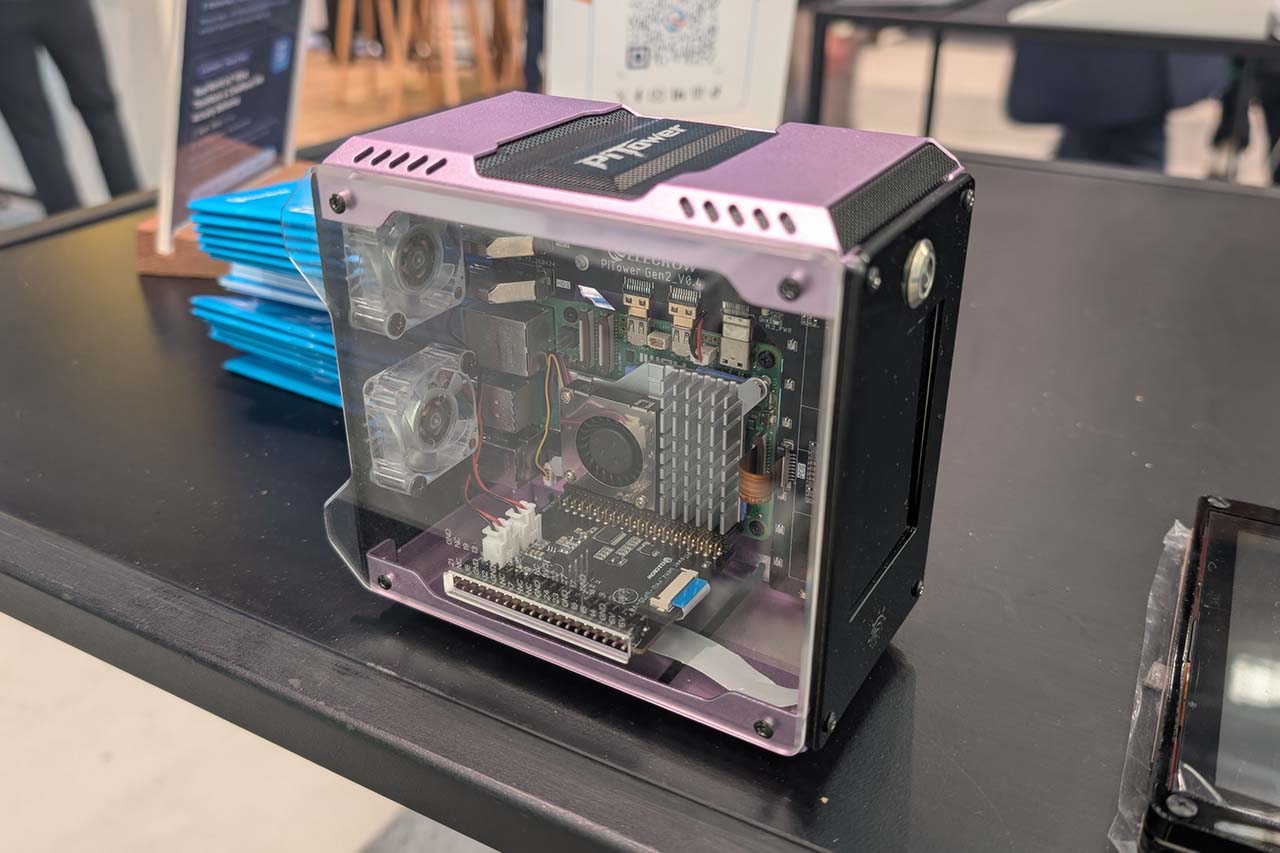
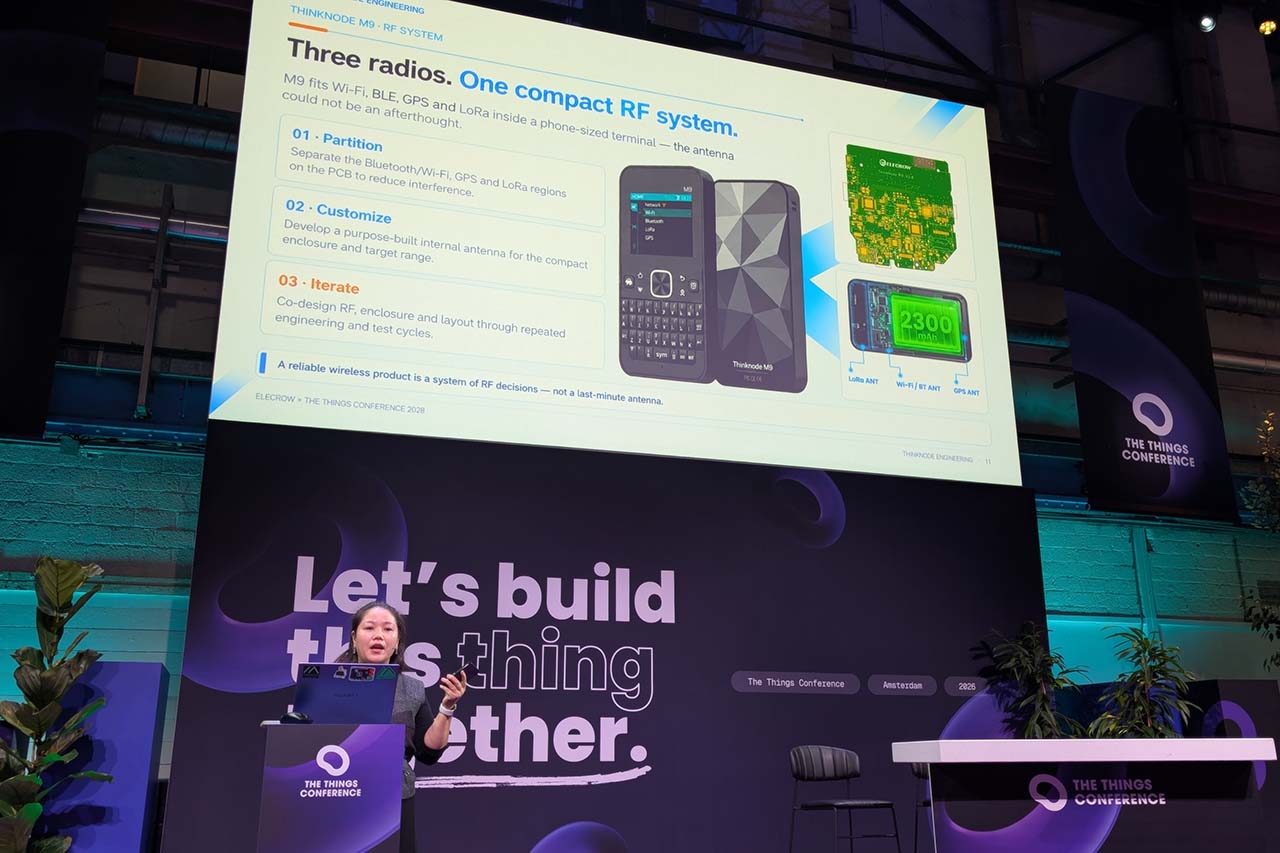
Elecrow from Shenzhen was founded in 2014 and is known to me primarily for its CrowPanel displays. At the conference, their focus was on LoRa and Meshtastic. The ThinkNode family ranges from credit-card-sized trackers to gateways and the ThinkNode M9, a handheld device with a keyboard that integrates Wi-Fi, Bluetooth, GPS, and LoRa. In addition, Elecrow showed the LR2021 Explorer Board, which allows voice to be transmitted directly over LoRa.
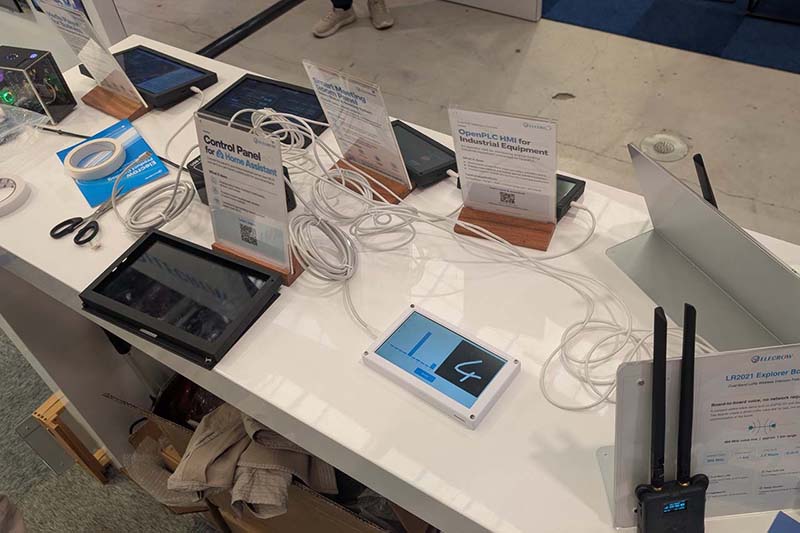
On the table with the HMI displays, my MNIST demo was also running on the CrowPanel with ESP32-P4. It is quite a nice feeling to see your own project at an exhibition booth in Amsterdam.
DeepGate
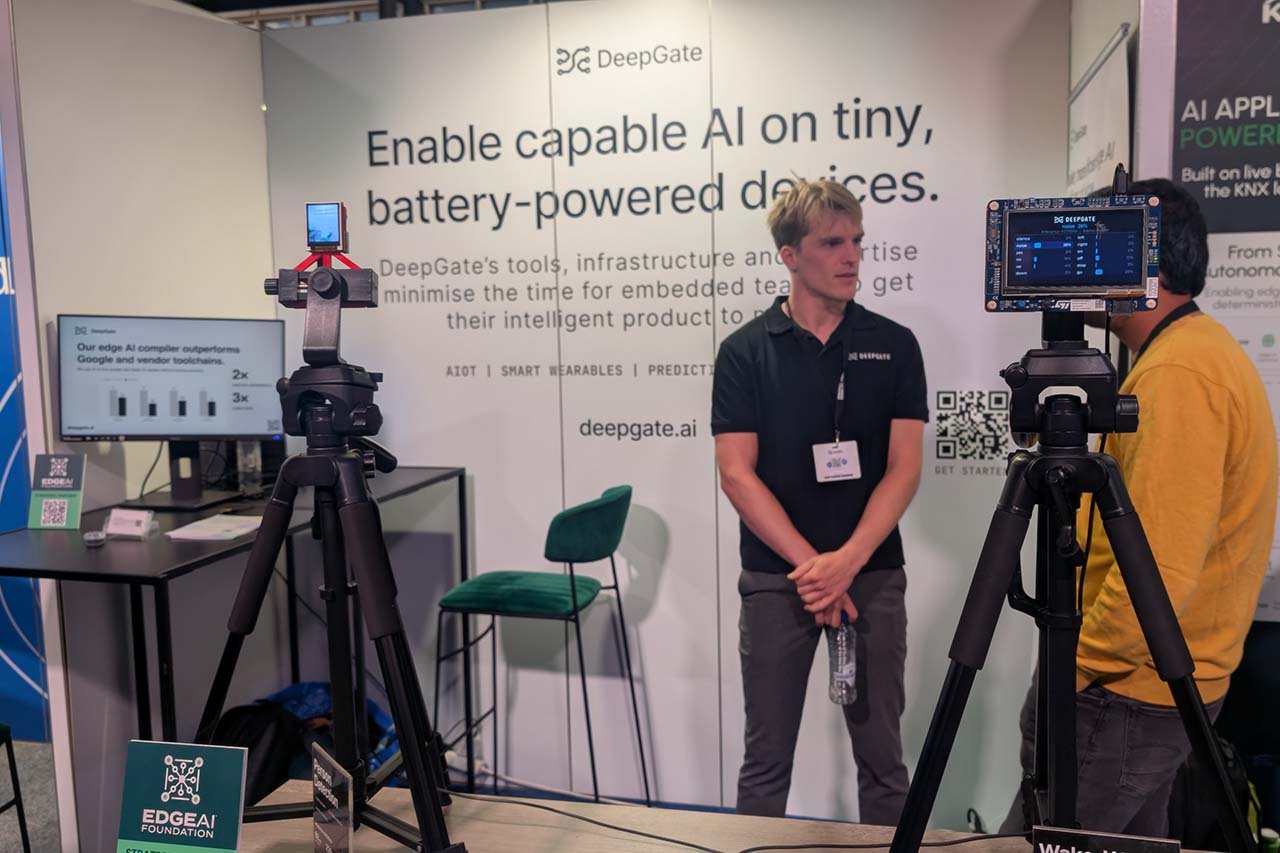
DeepGate is a young company from the UK that develops tools for AI on microcontrollers. Their compiler optimizes trained models so that they run with less RAM, less flash memory, and lower latency.
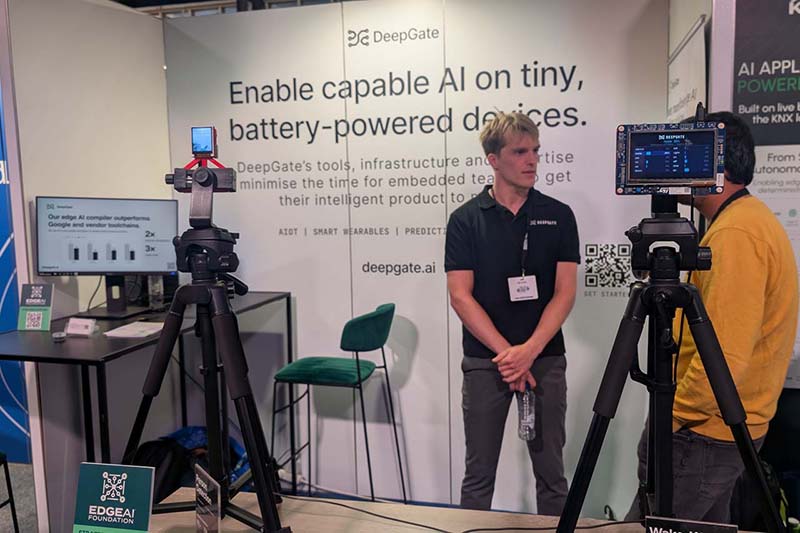
This is supposed to be significantly faster than the toolchains from Google and the chip manufacturers. Especially after my own experiences with quantization for the ESP32-P4, I found this very interesting.
Morse Micro
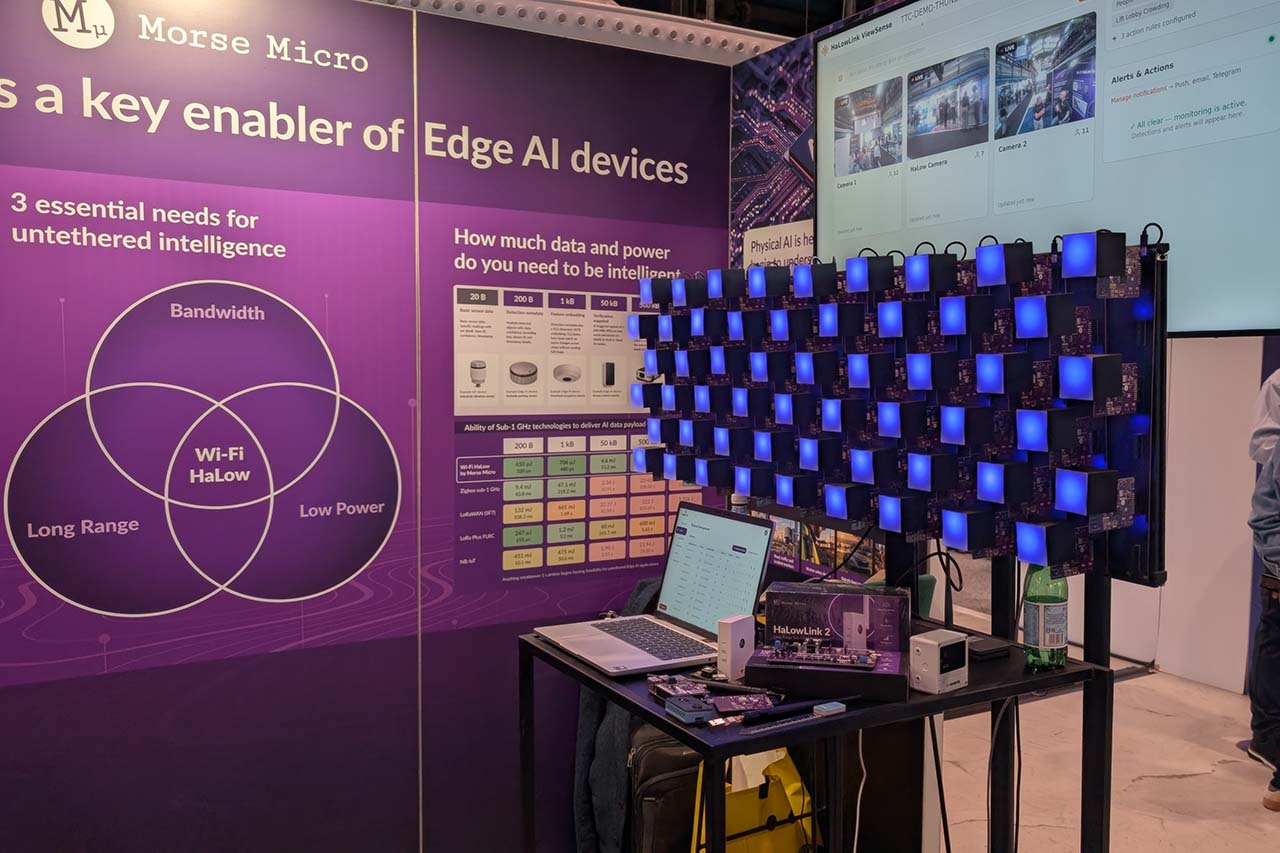
Morse Micro from Sydney develops chips for Wi-Fi HaLow, i.e., Wi-Fi according to IEEE 802.11ah in the sub-GHz range. The range is significantly higher than normal Wi-Fi, while the data rate is high enough for camera images. Using an entire wall of microcontrollers, they demonstrated that the data rate is sufficient to provide all devices with a software update.
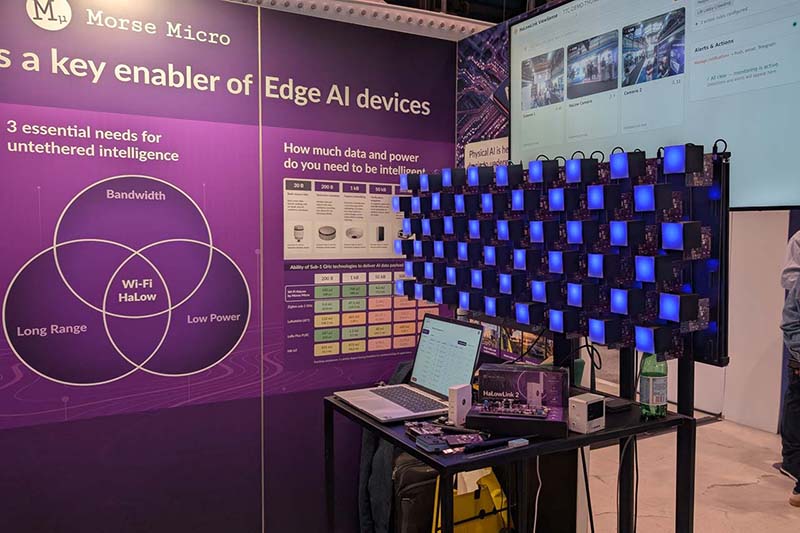
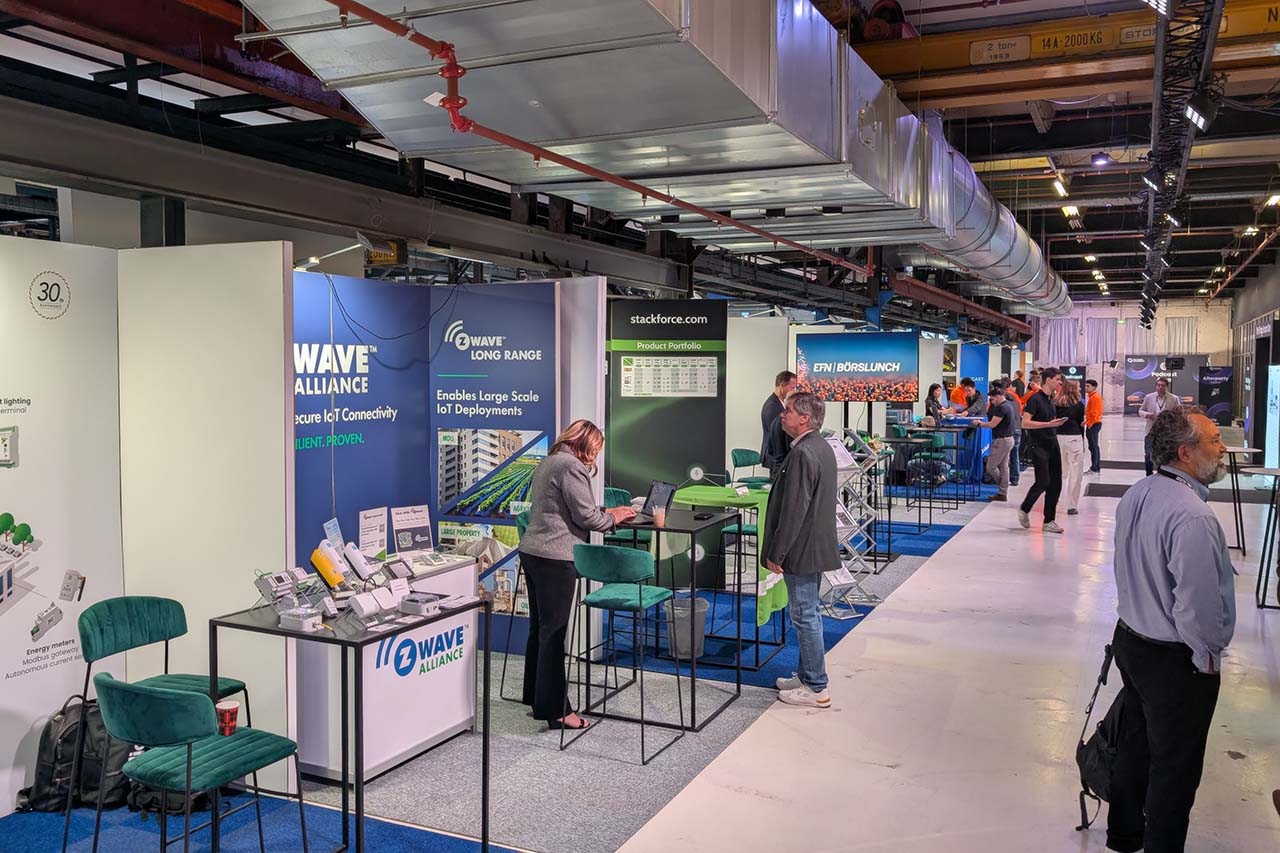
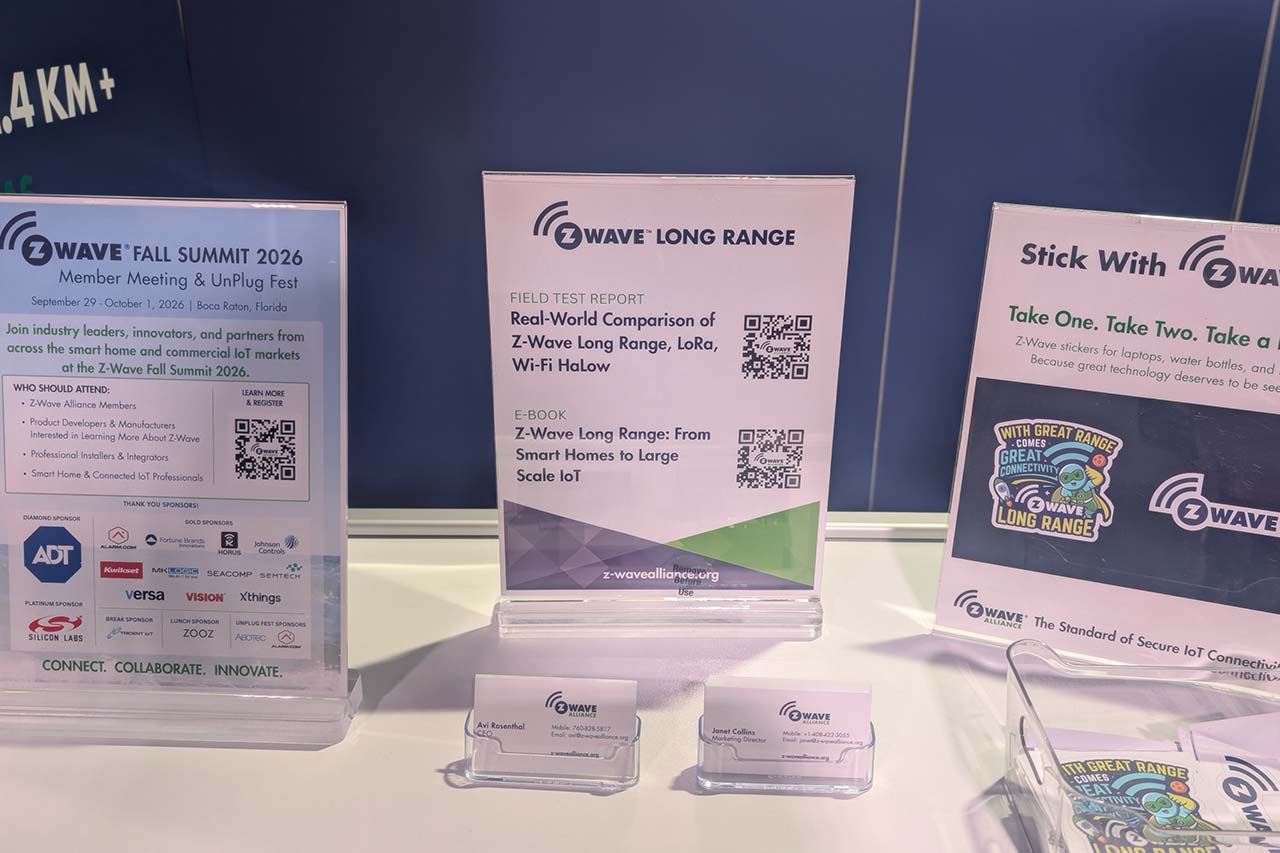
By the way, right nearby, the Z-Wave Alliance was promoting a field test comparing Z-Wave Long Range, LoRa, and Wi-Fi HaLow.
STMicroelectronics
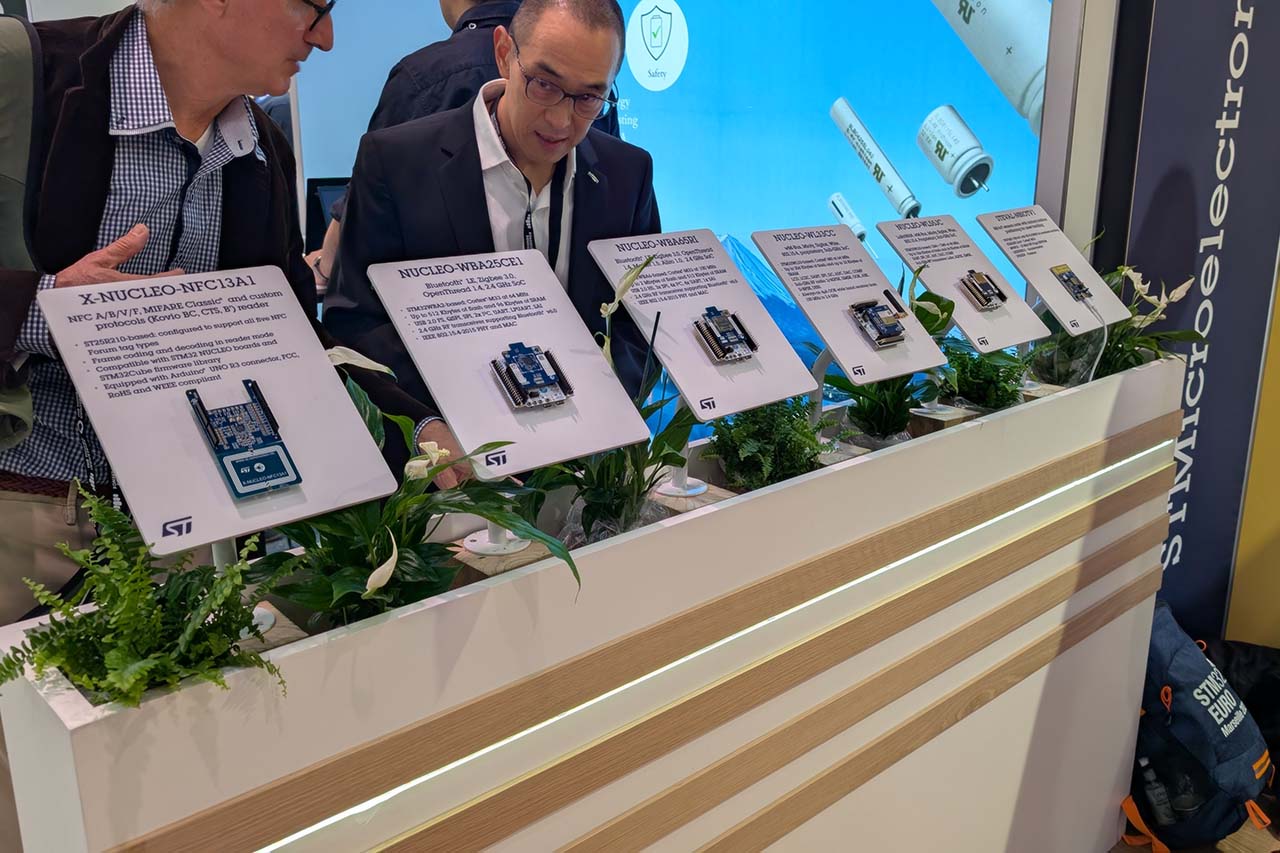
At ST, new Nucleo boards for wireless applications were the main focus. The X-NUCLEO-NFC13A1 is an NFC reader based on the ST25R210 that can read all five NFC Forum tag types. The NUCLEO-WBA25CE1 and the NUCLEO-WBA65RI are intended for Bluetooth LE, Zigbee, Thread, and Matter.
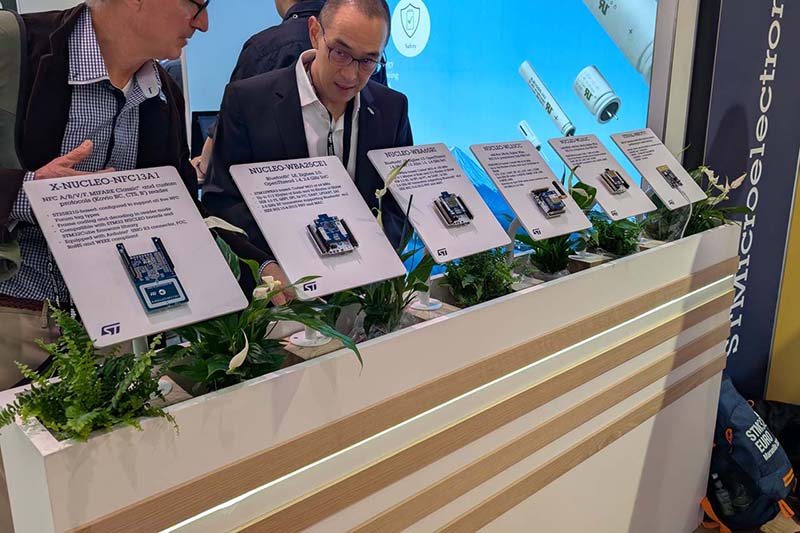
Both use a Cortex-M33, the WBA65RI with 2 MB of flash and 512 KB of SRAM, the smaller WBA25CE1 with 512 KB of flash and 96 KB of SRAM. For the sub-GHz range, there was the NUCLEO-WL33CC with the STM32WL33, which supports Wireless M-Bus, Sigfox, and Mioty, among others.
Epishine and Energy Harvesting
Finally, a topic that interests me greatly for my sensors. Epishine from Linköping in Sweden manufactures organic solar cells that are printed using a roll-to-roll process. They are optimized for indoor lighting and, according to the manufacturer, achieve an efficiency of around 15 percent at 500 lux. That sounds low, but it is a good value under indoor lighting. Silicon cells are designed for the solar spectrum and often only reach 5 to 10 percent under LED light.
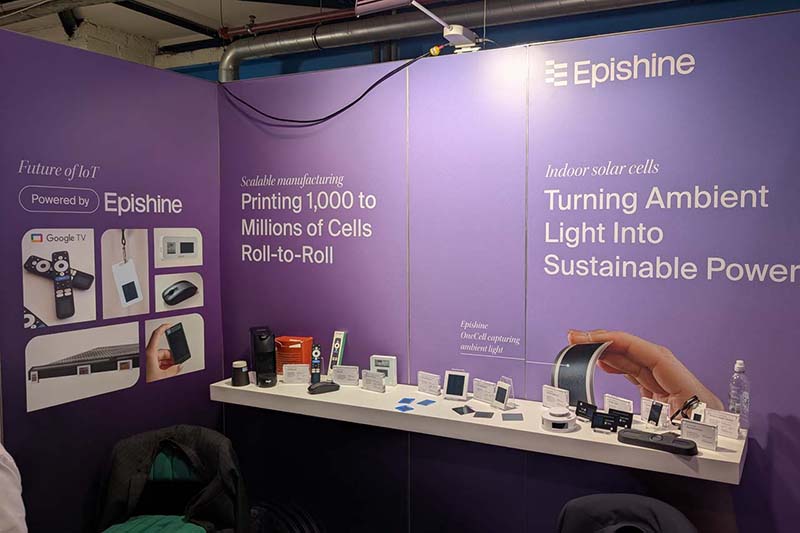
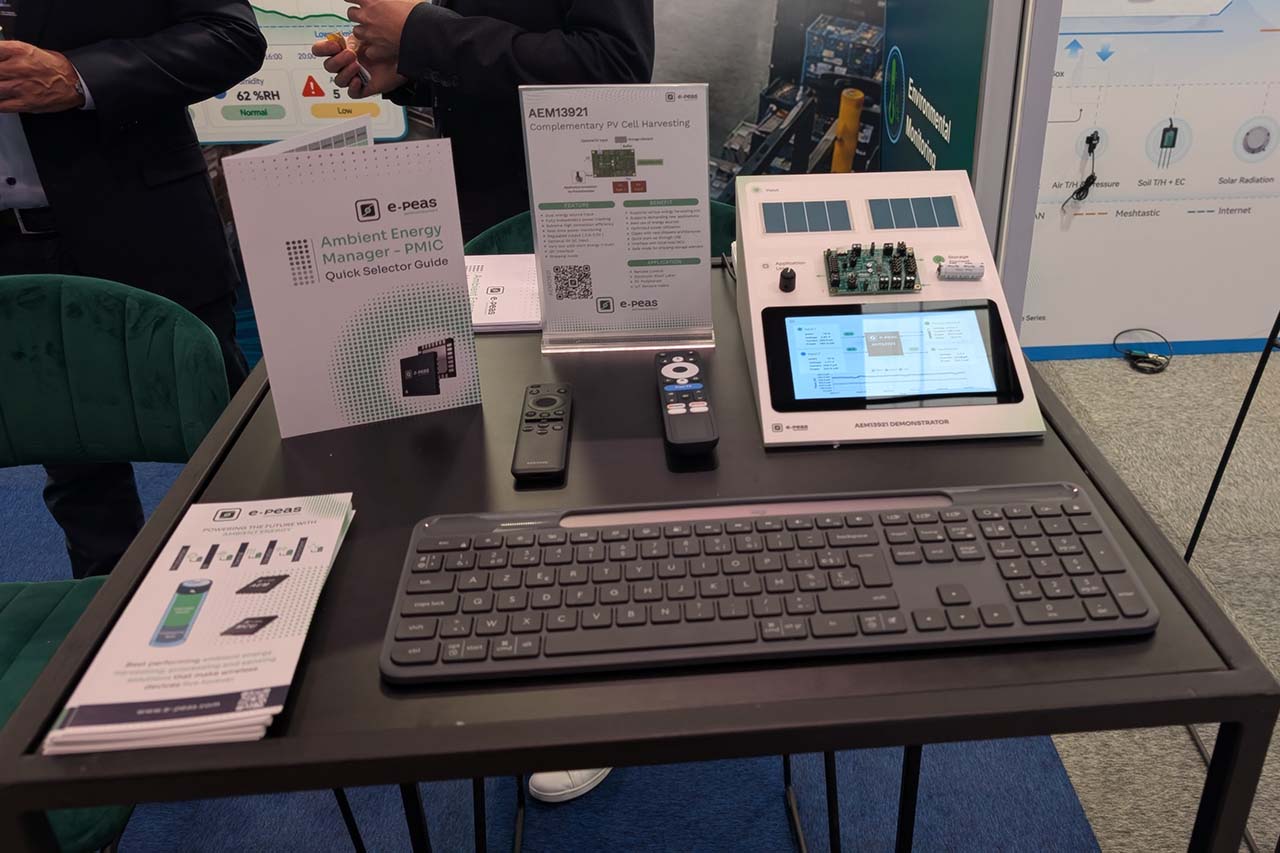
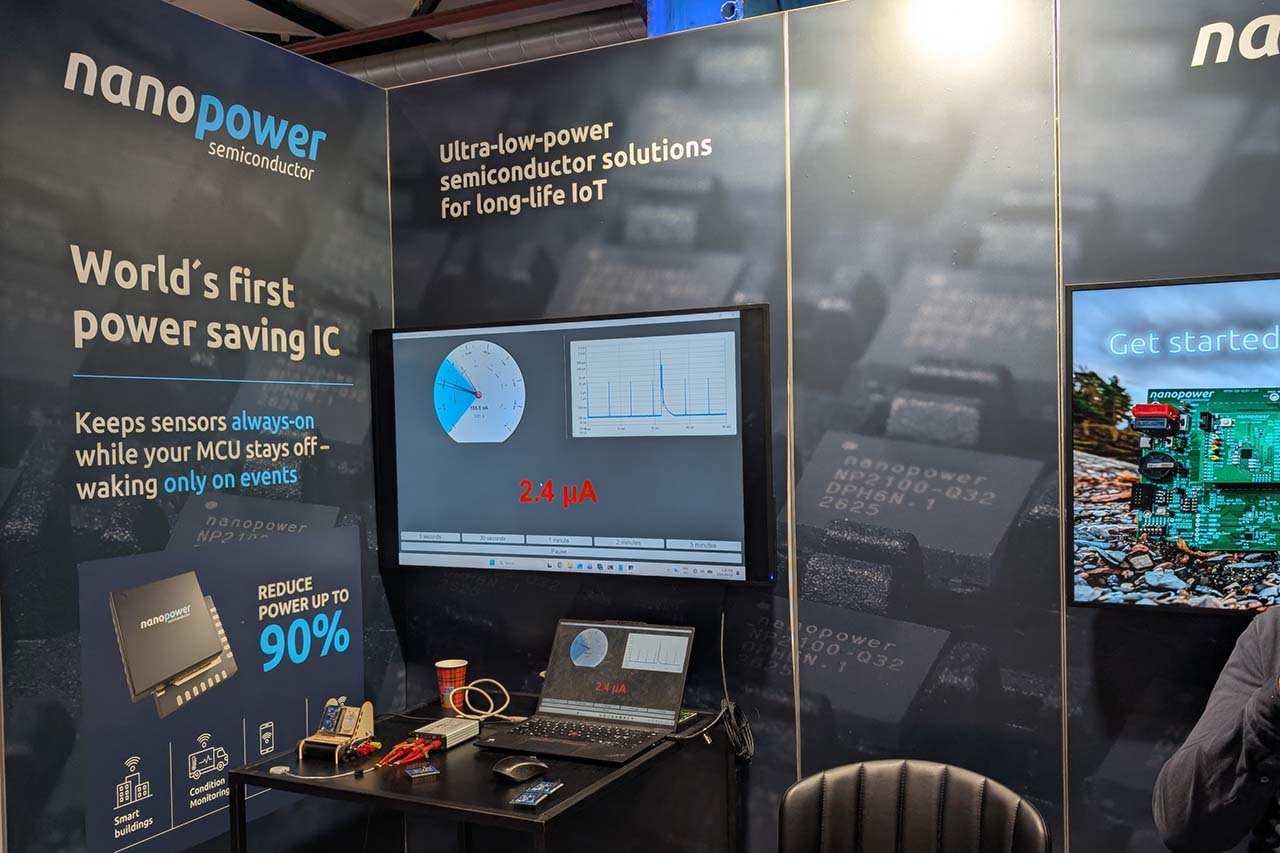
Fittingly, e-peas showed the AEM13921 energy harvesting chip, and nanopower had a demo board with a current consumption of just 2.4 µA. Battery-less sensors are thus moving a step closer for makers as well.
My Presentation
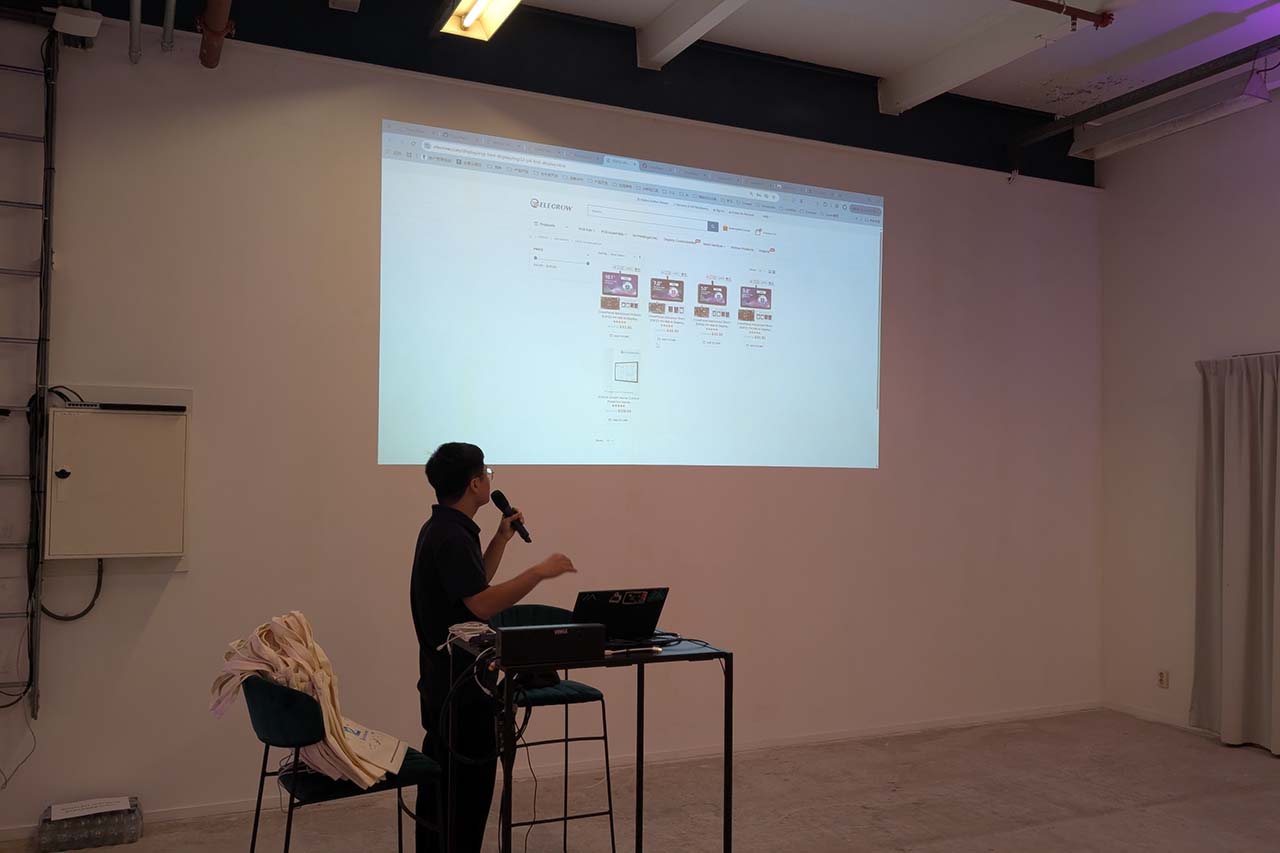
And then there was my own appearance. As part of Elecrow's program, I presented my MNIST project on the ESP32-P4. The steps from training in PyTorch through quantization to digit recognition on the display. The presentation was a lot of fun, even though it was a bit chaotic. The preparation was apparently not quite as professional as one would expect from a large conference. Wilson from the Elecrow team summed it up afterwards like this: "You saved my life". Afterwards, there were also a few questions. So people actually listened. Taking the opportunity, I also immediately answered the questions directed at Wilson that he didn't know the answer to himself :-)
Dinner with the Elecrow Team
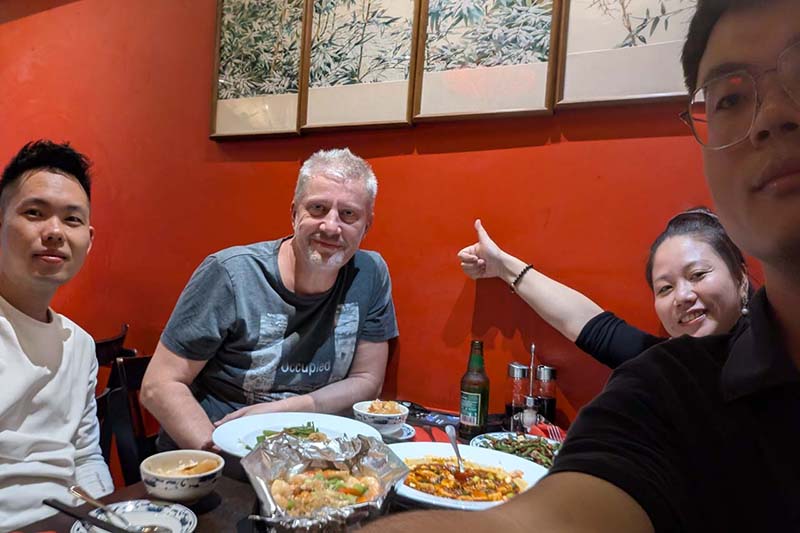
On the evening of the first day, I had dinner with the team from Elecrow. Since the colleagues are from China, we naturally went to a Chinese restaurant. It was a very nice evening and an interesting experience to get to know the people I otherwise only know from emails.
Conclusion
An email about a blog article turned into a few days in Amsterdam, my own presentation, and an evening with the Elecrow team. It was a good decision to visit The Things Conference, even though this event is primarily intended for the industry and cannot be compared to a Maker Faire.
Naturally, AI was the big topic at this conference too. While the many demos were very interesting, I am still looking for a concrete use case that I could implement with a project.
With the PSOC Edge E84, I now have the opportunity to get to know a complex microcontroller framework beyond the ESP32. Especially a comparison of the MNIST digit recognition will be very exciting. I assume that the PSOC Edge E84 will significantly outperform the ESP32-P4 in terms of performance.
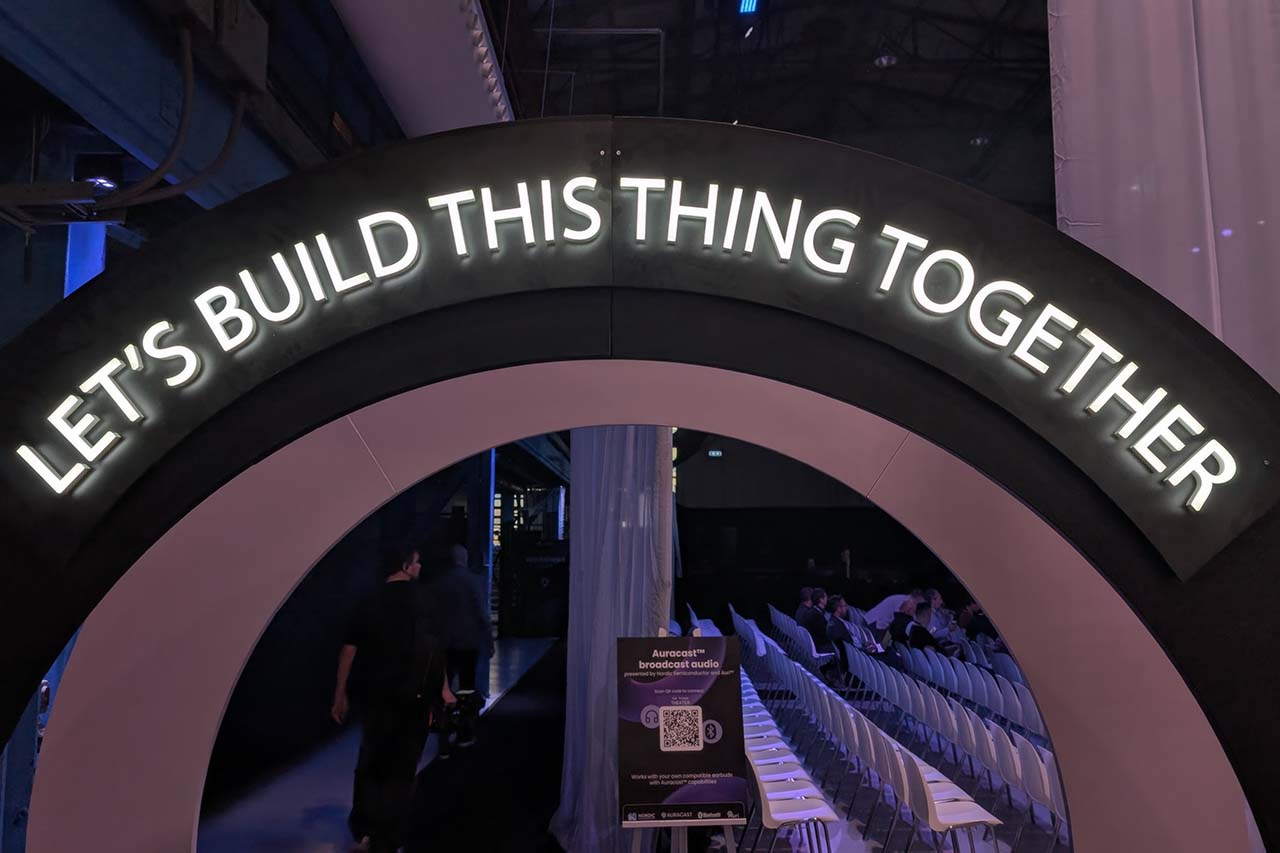
A big thank you to Elecrow for the invitation and to EBV Elektronik for the board! Finally, here are a few more impressions from The Things Conference.